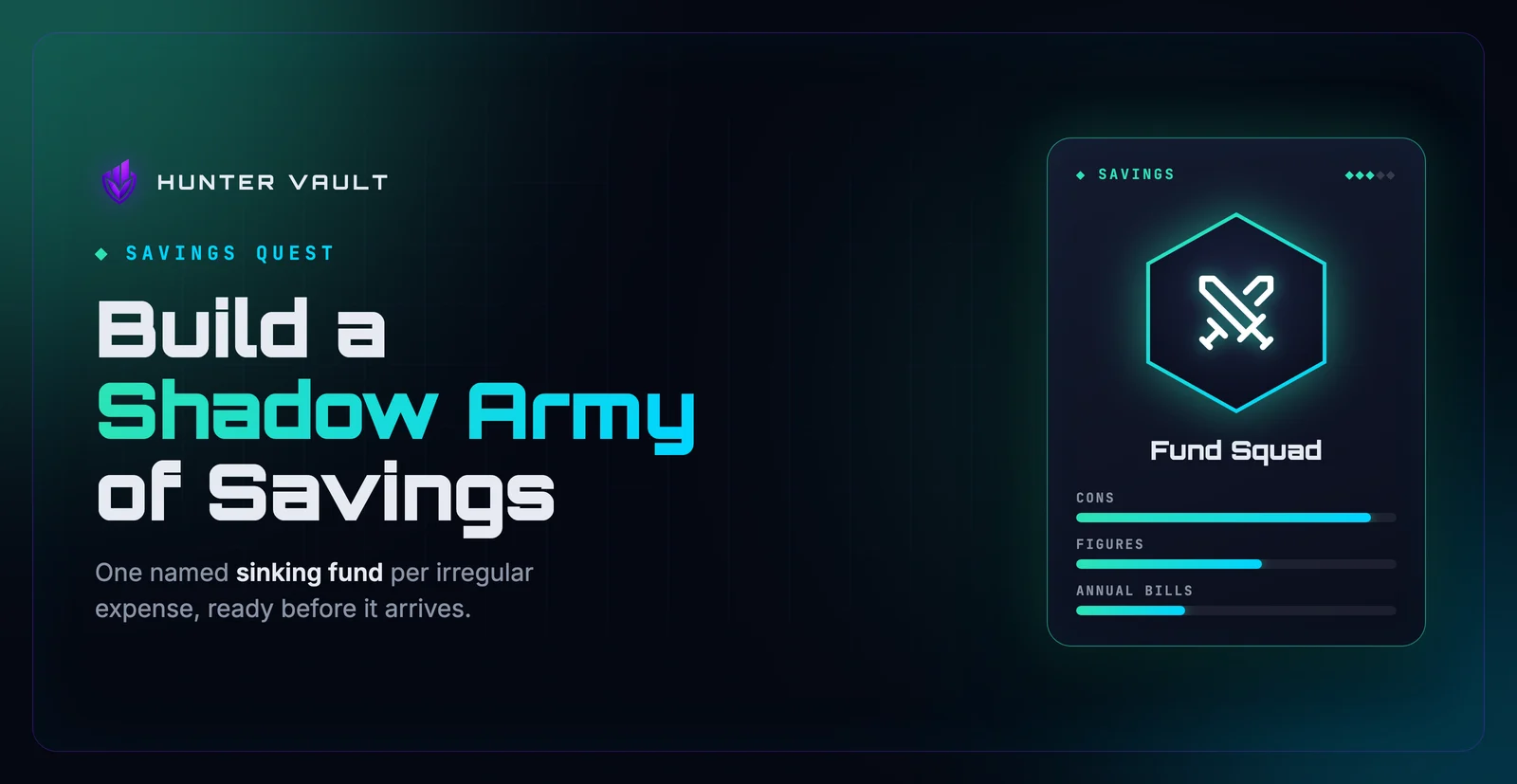
- A shadow army of savings is many small, named sinking funds — one per irregular expense — that quietly grow before the expense hits
- Each fund has a name, a target, and a monthly feed, so no single big cost ever wrecks a month
- Sinking funds cover the expected-but-irregular (cons, renewals, grail figures); your emergency fund stays for true surprises
- Divide each target by the months until you need it — that's the monthly feed — then keep the money separate and automate it
- Start with two or three funds you'll actually maintain, then recruit more soldiers as the habit sticks
In Solo Leveling, the hero doesn’t fight every battle alone. He raises the enemies he defeats as shadow soldiers — a silent, loyal army that stands ready before the next fight even begins. When a new threat appears, he doesn’t scramble to react. The army is already there, waiting.
Your money can work the same way. Instead of getting ambushed by the big, irregular expenses that show up every year — the convention weekend, the grail figure, the car registration, the surprise vet bill — you raise a quiet army of small savings funds ahead of time. Each one has a name, a job, and a steady monthly feed. By the time the expense arrives, the fund that handles it is already standing there, fully raised. That system has a boring financial name — sinking funds — and a much cooler one: your shadow army of savings. Here’s how to build it.
Quick Answer: What Is a Shadow Army of Savings?
A shadow army of savings is a set of small, named sinking funds — one for each irregular or annual expense you can see coming. You feed each fund a little every month, keep them separate from your spending money, and let them grow quietly in the background. When the expense finally arrives, the money is already raised: you pay from the fund instead of scrambling, borrowing, or blowing up a single month’s budget. It’s the same core idea behind the Hunter’s guide to personal finance — small systems, running on autopilot, that fight your battles for you.
Hunter Vault is an independent app inspired by RPG and anime progression systems. It is not affiliated with, endorsed by, or sponsored by the creators or rights holders of Solo Leveling. Character and story references here are used as commentary and inspiration only.
Why One Fund Isn’t Enough
A single emergency fund is like one powerful bodyguard — great for genuine surprises like a job loss or a medical bill you never saw coming. But most so-called emergencies aren’t actually surprises. The convention happens every year. The annual insurance premium lands on the same date it always does. Your favorite figure line eventually drops a grail. These costs are expected — you just don’t want them all landing at once on a random Tuesday.
A shadow army handles exactly those. Each soldier — each fund — has one job and one target. When you split your saving into many small, named funds instead of one anxious pile, three things happen: you stop raiding your emergency fund for non-emergencies, you always know exactly what each dollar is for, and no single expense ever detonates a month. The army absorbs the hit so you don’t have to.
The Expenses Your Army Should Cover
Every shadow soldier starts as a defeated enemy — an expense that used to ambush you. Look back over the last year and list the costs that arrived irregularly or annually. Common recruits:
| Fund (soldier) | What it handles |
|---|---|
| Convention fund | Con tickets, travel, hotel, artist alley |
| Grail / big-purchase fund | The expensive figure, statue, or import you actually want |
| Annual subscriptions | Yearly renewals billed in one lump |
| Car & transport | Registration, insurance, maintenance, new tires |
| Gifts & holidays | Birthdays and the December spike |
| Home & tech | Replacing a phone, laptop, or console when it dies |
| Health | Deductibles, dental, glasses, vet bills |
| True emergency fund | The one that stays untouched for real surprises |
Your list won’t match anyone else’s, and that’s the point. A figure collector’s army looks nothing like a new parent’s. If your biggest irregular costs are hobby-related, the anime hobby budget guide breaks those categories down further — and if you want the data on how fast fandom spending stacks up, see how much anime fans actually spend per year.
How to Raise Your Shadow Army
Hunt down every irregular expense
Go through your last twelve months of statements and list every cost that wasn’t a normal monthly bill: the con weekend, the yearly renewal, the holiday spending, the car service, the phone you had to replace. Don’t judge the numbers — just get the full roster. These are the enemies you’re about to recruit into soldiers. Almost everyone finds a few they’d completely forgotten, which is exactly why those expenses hurt when they arrive.
Give each one a named fund
A fund called “Savings” gets spent. A fund called “Anime Expo 2027” does not. The name is what turns a vague pile of money into a soldier with a mission. Give each expense its own labeled fund — specific enough that you’d feel a little guilty spending it on anything else. Naming is the cheapest, most effective trick in this whole system: it assigns intent to money that would otherwise drift.
Feed each fund monthly
For each fund, take the total you’ll need and divide it by the number of months until you need it. A $600 convention twelve months out is $50 a month. A $300 annual renewal six months out is also $50 a month. That per-fund number is the soldier’s monthly ration. Add all the rations together and you’ll see what your army costs each month — a single honest number that replaces a year of nasty surprises.
Keep the army separate from your spending
Money that lives in your everyday checking account gets spent, quietly and without a decision. Your funds need their own space — a dedicated savings account, a set of sub-accounts, or named vaults inside a budgeting app. The separation is the whole defense. When con money and grocery money share one balance, the con money loses. When each soldier stands in its own barracks, it stays ready.
Automate the feed on payday
Willpower is a bad general. Set up automatic transfers so each fund’s monthly ration moves on payday, before you have a chance to spend it on something else. An army that grows on autopilot is one you never have to argue with. Once the transfers are running, your only real job is to let time do the work — the funds fill themselves while you get on with your month.
Keeping the Army Loyal
An army you raise once and never check will slowly desert. A few light habits keep it standing:
- Review monthly. Glance at each fund for a minute. You’re just confirming the rations are landing and each soldier is on pace for its target.
- Retire and re-raise. When a fund does its job — the con is paid for — it resets to zero and starts rebuilding for next year. That’s not failure; it’s the soldier reporting back for the next battle.
- Feed it windfalls. A tax refund, a bonus, cash from selling old gear — instead of letting it dissolve into general spending, drop it straight into whichever fund is furthest behind.
- Resize when life changes. Costs drift. Update the monthly rations once or twice a year so no fund ends up over- or under-staffed.
Don’t try to raise a full army overnight. Two or three funds you actually maintain will beat a dozen you abandon in a month. Begin with your biggest predictable hits — say, a convention fund and a gifts fund — get comfortable feeding them, then recruit more soldiers as the habit locks in.
Let Hunter Vault Command the Army
Raising a shadow army is easy to start and just as easy to abandon — the funds scatter across accounts and you lose track of who’s ready for battle. Hunter Vault’s Money Vaults give each fund its own named vault, so your whole army stands in a single view: what each soldier is for, how full it is, and how close it is to ready. Watching the vaults fill turns a background chore into visible progress — which is the entire reason a gamified system sticks where a spreadsheet quietly drifts. You can pair a vault with a savings goal to track progress toward its target.
One honest note on size: vaults count as accounts, and the free plan covers up to 5 accounts and 2 savings goals. A starter army of two or three funds can fit within that, depending on how many other accounts you track, but a full eight-fund army needs Awakened Hunter, a one-time $15.99 upgrade that removes those limits. Hunter Vault is on iOS or Android.
Same paycheck, same expenses. The only difference is that when the big cost finally shows up, your army is already standing there — and you get to just point.
This is general educational content, not financial advice. Set up sinking funds that fit your income, obligations, and goals. Cover your essential bills and a basic emergency buffer before staffing up a full army of funds, and if money feels genuinely out of control, consider speaking with a qualified professional.
Frequently Asked Questions
What is a shadow army of savings?
A shadow army of savings is a set of small, named sinking funds — one for each irregular or annual expense you can see coming, like a convention, a grail figure, car registration, or a yearly renewal. You feed each fund a little every month and keep it separate from your spending money. When the expense arrives, the money is already raised, so you pay from the fund instead of scrambling or borrowing.
How is a sinking fund different from an emergency fund?
An emergency fund covers genuine surprises — a job loss, a medical bill you never saw coming — and stays untouched otherwise. A sinking fund covers expenses you know are coming but that arrive irregularly, like an annual premium or a con weekend. The shadow army approach uses many small sinking funds for the expected-but-irregular costs, so you never raid your emergency fund for something that wasn’t actually an emergency.
How many sinking funds should I have?
As many as you have recurring irregular expenses — but start small. Two or three funds you actually maintain beat a dozen you abandon in a month. Begin with your biggest predictable hits (say, a convention fund and a gifts fund), get comfortable feeding them, then recruit more soldiers as the habit sticks.
How much should I put into each fund every month?
Take the total you’ll need and divide it by the number of months until you need it. A $600 convention twelve months out is $50 a month. A $300 annual renewal six months out is $50 a month. Add the monthly feeds together to see your army’s total cost, and if it’s too high, extend a timeline or trim a fund rather than skipping the system entirely.
Where should I keep my sinking funds?
Somewhere separate from your everyday spending money — that’s the one real rule. That can be a dedicated savings account, several sub-accounts, or named vaults inside a budgeting app. Money that sits in your main checking account gets spent by accident. Money that has its own labeled space stays put until the expense it’s assigned to actually arrives.