Best Zero-Based Budgeting Apps in 2026 (Give Every Dollar a Job)
Zero-based budgeting means one thing: every dollar of income gets a planned job before the month starts, so income minus allocations equals zero. Most budgeting apps do not actually do this — they track spending after the fact and call it a budget. This guide compares the apps that implement give-every-dollar-a-job for real, ranked by how strictly they enforce it, what they cost, and whether you must link a bank. Prices below were read on vendor sites on 2026-11-10 with a cross-check on 2026-11-13; confirm on the vendor page before you pay.
On this page
Our picks for different budgeters
Side-by-side comparison
| App | Best for | Price | Bank sync | Manual entry | Debt tracking | Savings goals | Platforms |
|---|---|---|---|---|---|---|---|
 YNAB | Strictest zero-based discipline | $14.99/mo or $109/yr | Yes | Yes | Yes | Yes | iOS, Android, Web |
 EveryDollar | Ramsey Baby Steps followers | Free / Premium $79.99/yr | Yes (Premium) | Yes | Yes | Yes | iOS, Android, Web |
 Actual Budget | Free zero-based, self-hosted | Free (open-source) | Optional (SimpleFIN) | Yes | Yes | Yes | Desktop, Web, Mobile |
 Goodbudget | Envelope method, cash-friendly | Free / Premium $10/mo or $80/yr | Yes (Plus, US) | Yes | Yes | Yes | iOS, Android, Web |
| Tiller Money | Spreadsheet builders (Sheets/Excel) | $99/yr (30-day trial) | Yes | Yes | Via templates | Via templates | Google Sheets, Excel |
 Hunter Vault Our app | Manual budgets + gamified habit, no bank | Free (one-time Awakened Hunter upgrade; optional subscriptions) | No | Yes | Yes | Yes | iOS, Android |
YNAB Manual entry, debt & savings
EveryDollar Manual entry, debt & savings
Actual Budget Manual entry, debt & savings
Goodbudget Manual entry, debt & savings
Manual entry, debt & savings
Hunter Vault Our app Manual entry, debt & savings
Table last reviewed November 2026. Verify current pricing and features with each app's website — details may change.
How we evaluated these apps
We score every app against the same criteria, so the recommendations stay consistent and comparable.
How quickly you can set up a budget, log spending, and understand where your money goes.
Budgeting flexibility, expense-tracking quality, debt tracking, and savings-goal features.
Bank-sync availability and reliability, the manual-entry experience, and CSV / import support.
Pricing structure, free tiers, and whether paid plans are worth it for most people.
How each app handles your financial data, and whether bank linking is required at all.
iOS / Android / web availability, currency and localization support, and who the app is built for.
App-by-app breakdown
YNAB
Best for Hands-on budgeters who want the strictest method, properly taught
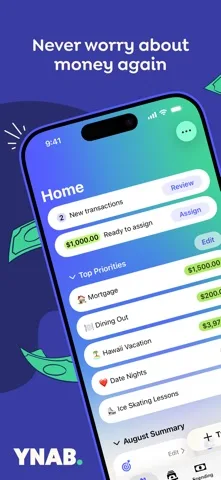
YNAB (You Need A Budget) is the app the zero-based category is measured against: give every dollar a job, embrace true expenses, roll with the punches, age your money. The method is the product — the app teaches the discipline through rules, live workshops, and a community that has run for years. At $14.99/month or $109/year with a 34-day trial (plus a free year for students), it is the most expensive pick here and the one most likely to change behavior. The cost is real effort: YNAB asks 30–60 minutes of setup and weekly attention, and it shows when you skip it.
Why we like it
- Strictest, most proven zero-based methodology of any app
- Rule system and workshops teach the discipline, not just the tool
- Bank sync and manual entry both fully supported
- Debt payoff and goal tracking built into the method
- 34-day trial; free year for students
Limitations
- $109/year — the priciest pick on this page
- Steep learning curve and real weekly effort
- Overkill if you only overspend in one or two categories
- No free tier beyond the trial
- Category-count fatigue: strictness scales with lines you maintain
Key details
EveryDollar
Best for Dave Ramsey followers who want zero-based inside the Baby Steps
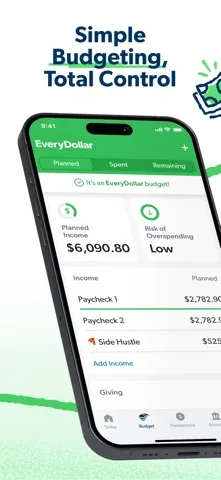
EveryDollar is Ramsey Solutions’ zero-based budgeting app: assign every dollar of income to a category until nothing is unassigned, inside the Baby Steps framework. The free tier covers manual zero-based budgeting with unlimited categories, which makes it the cheapest genuine entry point on this page. Premium ($79.99/year or $17.99/month, 14-day trial) adds bank sync, paycheck planning, and reports. It is simpler than YNAB and deliberately so — fewer rules, less teaching, faster setup. The trade is the Ramsey frame: if Baby Steps language annoys you, the app will too.
Why we like it
- True zero-based budgeting on the free tier (manual)
- Simplest setup of the dedicated zero-based apps
- Baby Steps integration for debt payoff motivation
- Unlimited categories even when free
- Premium undercuts YNAB by $30/year
Limitations
- Bank sync paywalled behind Premium
- Thinner methodology than YNAB — fewer guardrails
- Ramsey framing throughout; no secular mode
- US-centric (bank sync, Baby Steps assumptions)
- Reports and forecasting are basic vs YNAB
Key details
Actual Budget
Best for Privacy-minded budgeters who want zero-based free, forever
Actual Budget is a free, open-source, self-hosted app that implements genuine zero-based budgeting: budget every dollar, track against it, roll over what is left. There is no subscription, no ads, and no account with a vendor — your data lives where you put it. Bank sync is optional via SimpleFIN (US/Canada); otherwise you enter manually or import files. The price of free is setup friction: self-hosting (or the desktop app), no mobile-first polish, no coaching. For technical users it is the identical discipline to paid apps at zero cost.
Why we like it
- Free forever — open-source, no subscription or ads
- Real zero-based budgeting, not tracking with a budget label
- Self-hosted: your data never touches a vendor server
- Optional bank sync via SimpleFIN (US/Canada)
- Active open-source development, no sunset risk from one company
Limitations
- Self-hosting setup intimidates non-technical users
- No native mobile polish; desktop-first experience
- No coaching, workshops, or method teaching
- No official support channel beyond community
- You maintain it: updates and backups are yours
Key details
Goodbudget
Best for Envelope-system fans who want spending physically capped
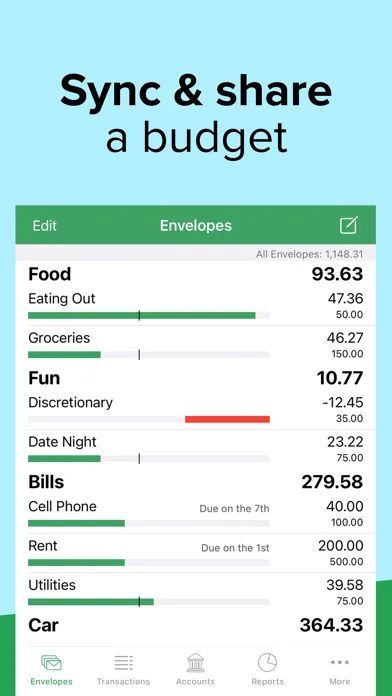
Goodbudget is the digital version of the cash envelope system: fill named envelopes at payday, spend until each is empty. It is the oldest form of zero-based budgeting there is — every dollar is assigned when the envelopes are filled — with one extra power: envelopes enforce, where planning-only methods merely suggest. The free tier covers the core loop with limited envelopes; Premium ($10/month or $80/year) adds unlimited envelopes, bank sync (US), and a longer history. It is less analytical than YNAB and proud of it: the product is a spending cap, not a dashboard.
Why we like it
- Envelopes enforce limits — strongest anti-overspend mechanic here
- Cash-friendly: works fully offline and by hand
- Free tier covers the whole core loop
- Simplest mental model: full envelope, empty envelope
- Great for couples splitting shared envelopes
Limitations
- Premium ($80/yr) costs nearly YNAB money for a simpler app
- Bank sync is US-only and paywalled
- Weak reporting vs YNAB or Tiller
- Envelope-count limits on the free tier push you to Premium
- Dated interface next to newer apps
Key details
Tiller Money
Best for Spreadsheet people who want automation without giving up control
Tiller Money feeds your bank transactions into Google Sheets or Excel automatically each day, then gets out of your way: you build the zero-based budget yourself with its templates. It costs $99/year after a 30-day free trial, with no monthly plan and no free tier (raised from $79 in August 2026). There is no standalone app and no method coaching — the product is a live transaction feed plus template library for people who think in cells. If you have ever maintained a budget spreadsheet by hand, Tiller removes the tedious half and keeps the control.
Why we like it
- Full spreadsheet control: Sheets or Excel, your formulas, your layout
- Daily automatic transaction feed — no manual export
- Template library covers zero-based, debt payoff, and net worth
- No ads, no data monetization, one clear price
- $99/year undercuts YNAB for sync-included budgeting
Limitations
- No free tier and no monthly billing — $99 upfront after trial
- No standalone app; Sheets/Excel required
- You build the budget — no method teaching or guardrails
- Setup and template learning curve for non-spreadsheet people
- Overkill if you will not open a spreadsheet weekly
Key details
Hunter Vault Our app
Best for Manual budgeters who want zero-based-style discipline with no bank link
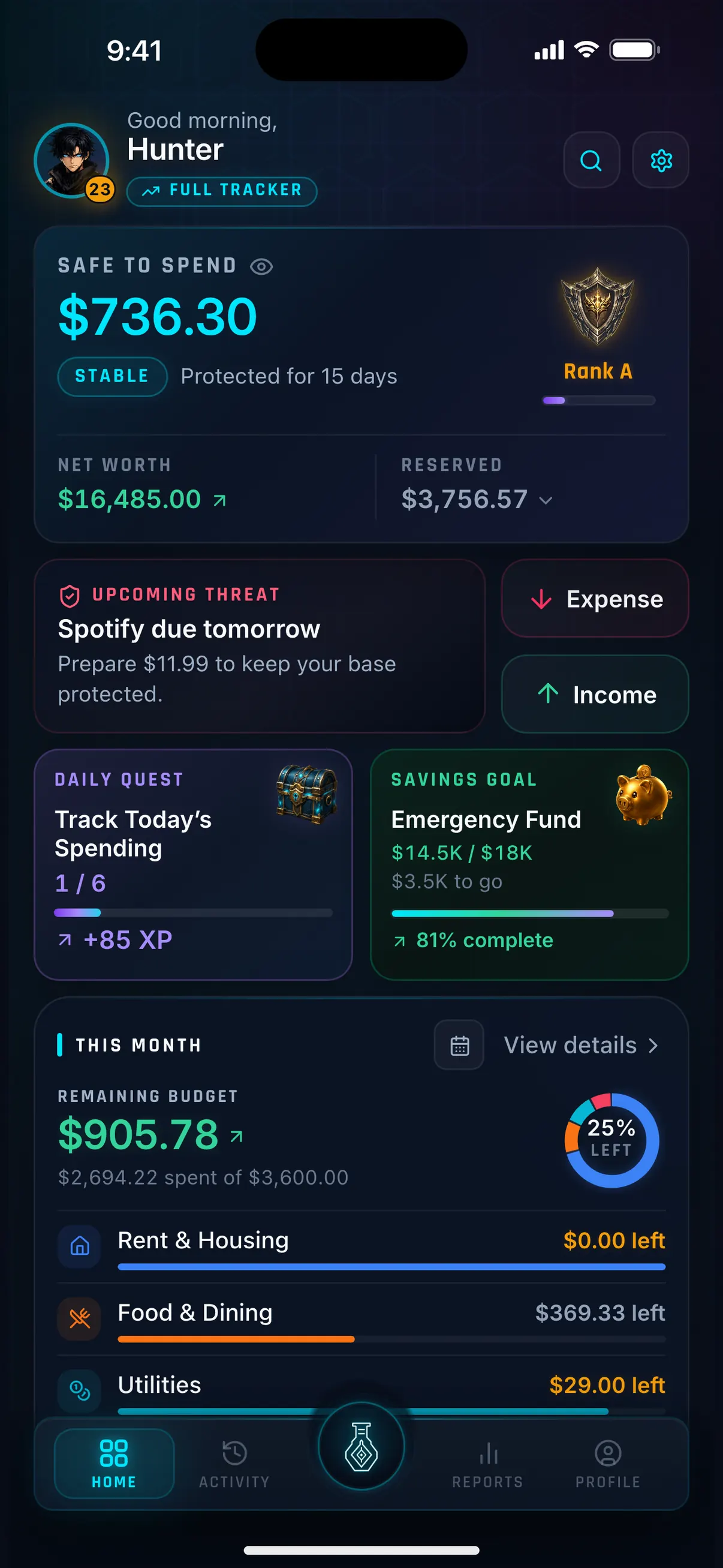
Hunter Vault (disclosure: our own app) takes a different route to the same goal: monthly budgets per category with manual logging, CSV import read on your device, and a gamified habit loop (quests, XP, ranks) that keeps you logging. It is zero-based in spirit — every budget gets a deliberate number before the month — but honest note: it does not force strict every-dollar allocation the way YNAB does. What it does instead is solve the reason zero-based budgets die: the upkeep habit. Core budgeting is free (8 budgets, 3 recurring, 5 accounts, 3 debts, 2 goals), no bank connection, no ads; Awakened Hunter is a one-time upgrade that removes the free-tier limits.
Why we like it
- Zero bank access: manual-first, CSV import read on-device
- Gamified habit loop (quests, XP, ranks) sustains the logging habit
- Free core covers a real multi-budget setup, no ads
- Safe-to-Spend number answers “can I buy this” in the moment
- Debt Raids and savings goals inside the same loop
Limitations
- Not strict every-dollar allocation — softer than YNAB by design
- Manual logging is the price of zero bank exposure
- No bank sync at all — automation seekers should pick YNAB or Tiller
- Mobile only (iOS, Android) — no web app
- Gamification does nothing if you never open the app either
Key details
Do zero-based apps need bank sync?
No — the method predates bank sync by decades, and every app here except Tiller works fully by hand. Sync is convenience, not methodology: it fills in transactions automatically, but the zero-based discipline (assign every dollar first, check before spending) happens in your head either way.
The real question is which failure mode worries you more. If you will not log transactions by hand, pick a sync pick (YNAB, EveryDollar Premium, Tiller) and connect the bank. If bank exposure worries you more than typing, pick a manual-first app (Actual Budget, Goodbudget, Hunter Vault) — all three run the full method with zero bank access. Hunter Vault never connects to your bank at all; CSV imports are read on your device. For the full privacy-first lineup, see apps that work without bank linking.
How to choose the right zero-based app
Match the app to why your last budget failed:
"I overspend and need strict rules": YNAB — the strictest method, properly taught. The $109/year pays for the discipline system, not just software.
"I follow Ramsey / want it free": EveryDollar — genuine zero-based on the free tier, Baby Steps built in.
"I want it free and private": Actual Budget — the full method, open-source, self-hosted, zero cost.
"I need a hard cap per category": Goodbudget — envelopes enforce where plans only suggest.
"I think in spreadsheets": Tiller Money — bank-fed Sheets or Excel you fully control, $99/year.
"I won't link my bank / I quit from boredom": Hunter Vault (our app) — manual budgets with no bank access, and a quest loop that makes the upkeep stick.
One honest note: strictness only works if you maintain it. A softer app you open daily beats YNAB gathering dust — pick the strictest method you will actually run.
New to the method itself? Start with zero-based budgeting, explained with a worked example, then settle envelope vs zero-based by your failure mode.
Frequently asked questions
What is the best zero-based budgeting app?
YNAB for the strictest method ($109/yr), EveryDollar for Ramsey-style budgeting free, Actual Budget for free open-source zero-based, Goodbudget for envelope discipline, or Hunter Vault for manual zero-based-style budgets with no bank link. The “best” is the strictest one you will actually maintain.
Is there a free zero-based budgeting app?
Yes. Actual Budget is free and open-source with the full method. EveryDollar’s free tier covers manual zero-based budgeting, Goodbudget’s free tier covers core envelopes, and Hunter Vault’s core budgeting is free (8 budgets, 3 recurring, 5 accounts, 3 debts, 2 goals) with no bank connection.
What is the difference between zero-based and envelope budgeting?
Zero-based budgeting is the principle: assign every dollar of income a planned job before the month starts. Envelope budgeting is the oldest enforcement of it: fill category envelopes and stop when one is empty. Envelopes enforce, zero-based plans — most people do best combining both. Our envelope vs zero-based comparison walks through which failure each fixes.
Do zero-based budgeting apps require bank sync?
No. YNAB, EveryDollar, Actual Budget, Goodbudget, and Hunter Vault all run the full method by hand. Sync only automates transaction entry. Tiller is the exception: its daily bank feed is the product. If bank exposure worries you, the manual-first picks lose nothing methodologically.
Is Hunter Vault a zero-based budgeting app?
In spirit, with one honest caveat: Hunter Vault (our own app) gives every budget a deliberate monthly number and tracks against it, but it does not force strict every-dollar allocation the way YNAB does. It trades maximum strictness for a habit loop — quests, XP, ranks — plus zero bank access, which is why people who quit stricter apps land here.
More Hunter Vault guides
Level up your money
Track spending, complete quests, and build better financial habits — the RPG way. Free to start, no bank linking required.


Free to start · No account needed · Works offline