Best Debt Payoff Apps for Single Moms in 2026 (Free-First, Low-Time Picks)
Single moms and dads paying off debt need the same three things: free first, no bank login to set up, and reminders that survive a chaotic week. A subscription you have to justify and a bank connection you have to trust are both friction you do not need. This guide judges debt payoff apps by single-parent criteria specifically: free-plan strength, snowball and avalanche support, shift-income flexibility, and reminders that actually fire. (General information only — not financial advice. For free human help, the nonprofit NFCC counsels over the phone at no charge.)
On this page
Our picks for different budgeters
Side-by-side comparison
| App | Best for | Price | Bank sync | Manual entry | Debt tracking | Savings goals | Platforms |
|---|---|---|---|---|---|---|---|
 Hunter Vault Our app | Reminders and streaks that survive chaos | Free (one-time Awakened Hunter upgrade; optional subscriptions) | No | Yes | Yes (3 debts on free) | Yes | iOS, Android |
| Undebt.it | Free unlimited payoff planning | Free (Plus $10/yr) | No (optional on Plus) | Yes | Yes | No | Web, installable |
| Debt Payoff Planner | Dedicated phone tracker | Free with ads (Pro from $6.99/mo) | No | Yes | Yes | No | iOS, Android |
 EveryDollar | Ramsey snowball method built in | Free manual (Premium $79.99/yr) | Premium only | Yes | Yes (snowball order) | Yes | iOS, Android, Web |
 YNAB | Strict method, highest effort | $14.99/mo or $109/yr (no free tier) | Yes | Yes | Partial (one loan at a time) | Yes | iOS, Android, Web |
 PocketGuard | One safe-to-spend number | Limited free (Plus $74.99/yr) | Yes | Yes | Yes | Yes | iOS, Android, Web |
Hunter Vault Our app Manual entry, debt & savings
Manual entry, debt & savings
Manual entry, debt & savings
EveryDollar Manual entry, debt & savings
YNAB Manual entry, debt & savings
PocketGuard Manual entry, debt & savings
Table last reviewed November 2026. Verify current pricing and features with each app's website — details may change.
How we evaluated these apps
We score every app against the same criteria, so the recommendations stay consistent and comparable.
How quickly you can set up a budget, log spending, and understand where your money goes.
Budgeting flexibility, expense-tracking quality, debt tracking, and savings-goal features.
Bank-sync availability and reliability, the manual-entry experience, and CSV / import support.
Pricing structure, free tiers, and whether paid plans are worth it for most people.
How each app handles your financial data, and whether bank linking is required at all.
iOS / Android / web availability, currency and localization support, and who the app is built for.
App-by-app breakdown
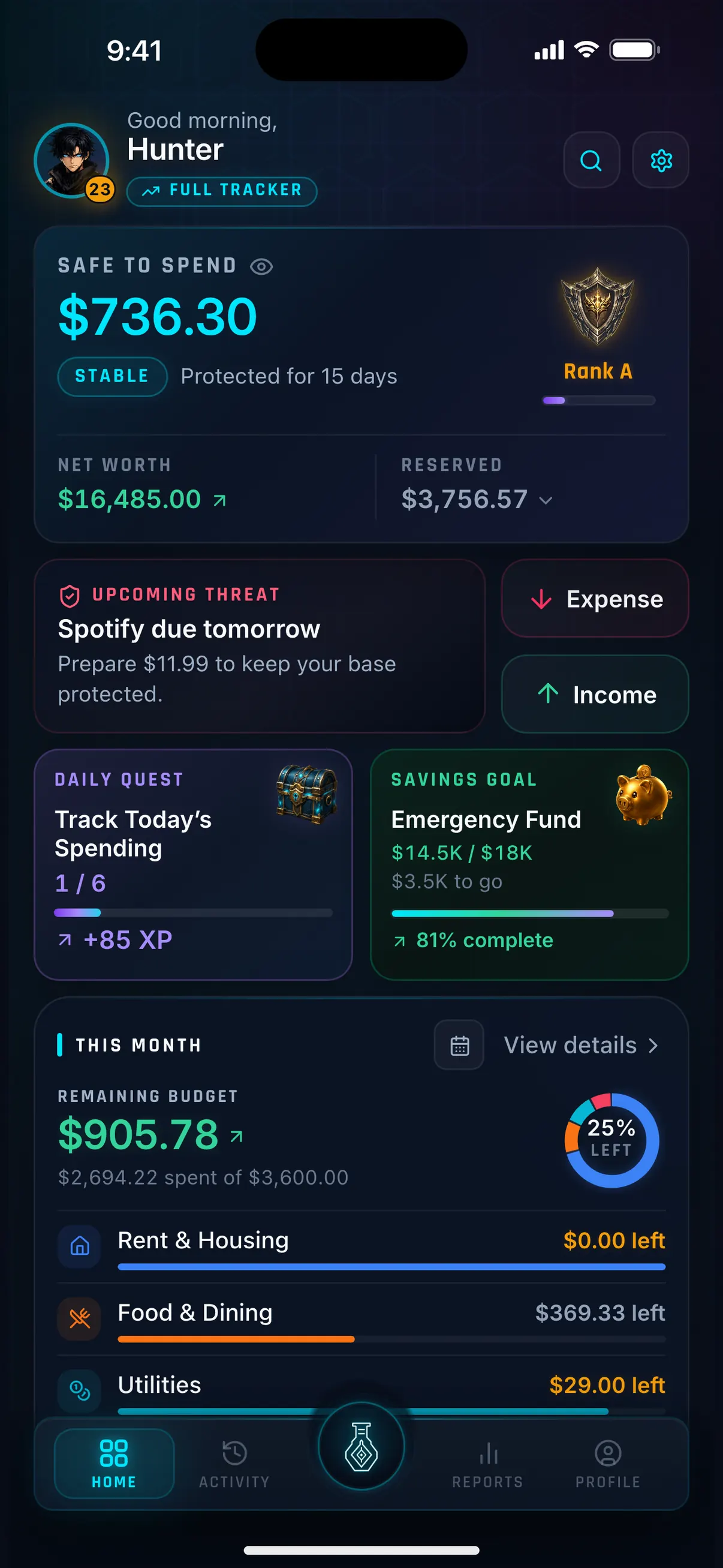
Hunter Vault Our app
Best for Single parents whose problem is remembering, not planning
Hunter Vault covers the failure mode generic planners ignore: life too chaotic to check a spreadsheet. Due-day reminders fire three days before each bill, monthly streaks reward showing up, and the quest loop makes logging feel like progress instead of paperwork. Core debt tracking is free for up to 3 debts with no bank login; Awakened Hunter is a one-time $15.99 purchase. It will not build you an 8-method payoff comparison — pair it with Undebt.it for the math and let Hunter Vault carry the remembering.
Why we like it
- Due-day reminders built for chaotic weeks
- Streaks and quests sustain the habit
- Free core: 3 debts, no bank link, no ads
- One-time upgrade, no subscription required
- Manual entry keeps amounts visible
Limitations
- Free tier caps at 3 debts
- No snowball/avalanche comparison engine
- Mobile-first — no web entry interface
- Still requires manual logging
- Smaller community than mainstream rivals
Key details
Undebt.it
Best for Single parents who want the strongest free plan, full stop
Undebt.it is the best free debt payoff planner we found anywhere. The free plan covers unlimited debts and all eight payoff methods — snowball, avalanche, hybrids, and custom order — with a month-by-month schedule and no bank login. Undebt.it+ costs $10 a year after a 2026 price cut: a single yearly fee that does not auto-renew, with a 30-day trial and no card needed. It runs in any browser and installs to the home screen; there is no App Store or Google Play app, which is the main thing phone-first users will miss.
Why we like it
- Free unlimited debts and all 8 payoff methods
- No bank login, no card, no trial clock
- Plus is $10/year — cheapest paid tier here
- Side-by-side method comparison before committing
- Installable to phone home screen from browser
Limitations
- Web-first — no native mobile app
- No built-in reminders on free (Plus adds push)
- Manual entry only unless Plus + SimpleFIN
- Utilitarian design, zero motivation layer
- No budgeting beyond the payoff plan
Key details
Debt Payoff Planner
Best for Single parents who want payoff tracking as a phone app
Debt Payoff Planner & Tracker (OxbowSoft) is the most established dedicated debt app on iOS and Android: snowball, avalanche, snowflake, and custom payoff orders with a full schedule on your phone. Free with ads; Pro removes ads and unlocks the full schedule. Pricing has moved several times across platforms in 2026 — our October check showed $6.99/month or $27.99/year, but confirm in your app store before buying, and match the exact OxbowSoft listing since several similarly-named apps exist.
Why we like it
- Purpose-built phone tracker, no learning curve
- Snowball, avalanche, snowflake, custom orders
- Free tier covers the core payoff schedule
- Payment reminders on the device you carry
- No bank login required
Limitations
- Free tier carries ads
- Pro pricing shifts by platform and over time
- Easily confused with similarly-named apps
- No budgeting beyond debt payoff
- Yearly Pro costs ~3× Undebt.it+
Key details
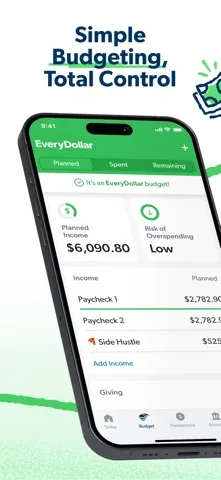
EveryDollar
Best for Single parents who want the Ramsey snowball as their method
EveryDollar (Ramsey Solutions) builds debt payoff the Dave Ramsey way: debts listed smallest to largest, attacked in snowball order, inside a zero-based budget. The free tier is a complete manual budget with unlimited categories, sinking funds, and bill tracking — no time limit. Premium ($79.99/year or $17.99/month) adds bank sync, a debt payoff tracker, and coaching. The method fit is the point: if Baby Steps are your operating plan, the app enforces them. If you prefer avalanche order or carry a rewards card, it will fight you.
Why we like it
- Free tier is a complete manual budget, unlimited time
- Snowball method built into the debt workflow
- Sinking funds and bill tracking free
- One budget a household can share
- Premium adds sync + payoff tracker + coaching
Limitations
- Snowball order only — no avalanche option
- Premium monthly ($17.99) is punitive vs annual
- Assumes Ramsey orthodoxy (no credit cards, ever)
- Bank sync is Premium-only
- Weak for irregular/shift income planning
Key details
YNAB
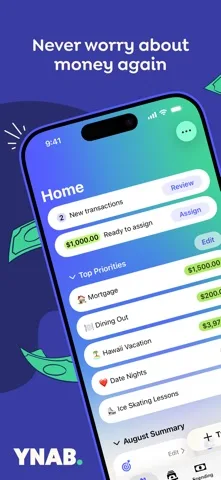
Best for Single parents who want maximum method and can pay for it
YNAB is the strictest system here: zero-based budgeting with four rules, at $14.99/month or $109/year with a 34-day trial and no free tier. For debt specifically, know its limit first: the Loan Planner simulates one loan at a time rather than ordering several debts, so multi-debt payoff planning is weaker than the dedicated planners above. What YNAB buys is behavior change infrastructure — every dollar assigned, overspending flagged immediately — at the highest price and highest effort on this page. Honest take for this audience: powerful if structure carries you, punishing if money is already tight and time is short.
Why we like it
- Strongest behavior-change method overall
- Every dollar assigned — nothing drifts
- Excellent teaching resources
- 34-day trial, longest here
- Bank sync plus manual entry
Limitations
- $109/year — priciest pick, no free tier
- Loan Planner handles one loan at a time
- Steep learning curve and ongoing effort
- High abandonment risk for exhausted users
- Overkill if debt payoff is the only job
Key details
PocketGuard
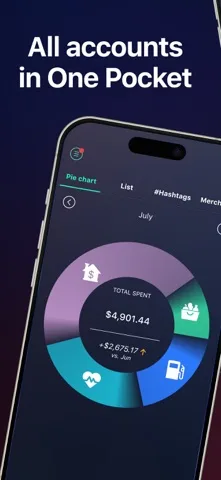
Best for Single parents who need one safe number plus payoff tracking
PocketGuard collapses the budget into "safe to spend" — one number net of bills, goals, and income — with debt payoff tracking included. Plus is $12.99/month or $74.99/year with a 7-day trial, plus a $149.99 lifetime option; the free tier is limited (2 accounts). Bank sync covers the US, Canada, and the UK. For single parents drowning in categories, radical simplification is the feature: one number answers "can I pay extra on the card this month?" without opening a spreadsheet.
Why we like it
- One safe-to-spend number, minimal upkeep
- Debt payoff tracking included
- Lifetime $149.99 option beats subscriptions
- Bank sync in US, Canada, UK
- Pace feature shows spending rhythm gently
Limitations
- Plus required for the full experience
- Limited free tier (2 accounts)
- One number hides useful detail some months
- No avalanche/snowball comparison engine
- Less goal depth than YNAB or Monarch
Key details
Do single parents need bank sync for debt payoff?
No — and for this audience, manual-first is usually better. Debt payoff runs on three numbers per debt (balance, rate, minimum), all visible on statements. Typing them into Undebt.it, Debt Payoff Planner, or Hunter Vault takes one sitting and keeps every dollar visible, which is exactly the awareness that prevents new debt while old debt shrinks.
Sync helps in one case: tracking the spending *around* the payoff. If money leaks faster than extra payments land, PocketGuard or YNAB's synced view finds the leak. EveryDollar Premium syncs too. But sync is a convenience, not a requirement — and it adds a bank login to trust plus (except trials) a subscription to justify. Start manual. Add sync only if untracked spending is the actual problem.
How to choose the right debt payoff app as a single parent
Match the app to your constraint, not to a rating:
"I have $0 for apps": Undebt.it — unlimited debts, every payoff method, free with no trial clock. The only complete $0 option here.
"I forget to pay more than I forget the plan": Hunter Vault — due-day reminders plus streaks aimed at execution, free for up to 3 debts. Pair it with Undebt.it for the math.
"I want it on my phone": Debt Payoff Planner — dedicated tracker with snowball, avalanche, and reminders. Verify the OxbowSoft listing before downloading.
"I want a method that decides for me": EveryDollar (free snowball workflow) or YNAB ($109/year full method). Pick EveryDollar for debt-only focus, YNAB for a total money overhaul.
"I need one number, not a system": PocketGuard — safe-to-spend plus payoff tracking, with a lifetime option that ends subscriptions.
Two method notes. First, snowball (smallest balance first) vs avalanche (highest rate first): avalanche saves more interest, but snowball kills a whole debt fastest — and for exhausted users, a dead debt beats optimal math. Run both orders through the debt snowball vs avalanche calculator and pick the one you will actually follow. Second, shift or irregular income breaks fixed monthly plans: budget off your *lowest* typical month and treat bigger paychecks as extra payments, not lifestyle.
For the method-agnostic version of this comparison (10 apps, no audience filter), see best debt payoff apps. For the payoff routine itself — minimums, extra-payment order, what to do when income drops — read how to pay off debt while still saving. And if debt already exceeds what any app can schedule, skip apps entirely: nonprofit credit counseling (NFCC member agencies) is free, human, and built for exactly that situation.
Frequently asked questions
What is the best free debt payoff app for single moms?
Undebt.it: unlimited debts, all eight payoff methods including snowball and avalanche, no bank login, no trial clock. Hunter Vault is the best free complement for reminders and streaks (3 debts on free). Debt Payoff Planner covers phone-first tracking free with ads.
Snowball or avalanche on a single income?
Avalanche (highest rate first) saves more interest; snowball (smallest balance first) kills a whole debt fastest. On one income with kids, most planners recommend snowball — an eliminated minimum payment frees cash flow sooner, which matters more than optimal interest math when margins are thin.
How do I pay off debt on shift work or irregular income?
Budget off your lowest typical month, automate minimums, and treat bigger paychecks as extra debt payments rather than spending money. Apps with flexible plans (Undebt.it custom order, YNAB zero-based) handle variable income better than fixed-monthly planners.
Is YNAB worth it for a single parent?
Only if you want a total money method and can afford $109/year plus the learning curve. For debt payoff alone it is overkill — and its Loan Planner simulates one loan at a time, so multi-debt ordering is weaker than the free dedicated planners.
Do I need to link my bank to pay off debt?
No. Debt payoff needs three numbers per debt — balance, rate, minimum — all on your statements. Undebt.it, Debt Payoff Planner, Hunter Vault, and EveryDollar free all work fully manual. Link a bank only if untracked spending (not the payoff plan) is the problem.
What if I cannot afford any extra debt payments right now?
Then the job is minimums plus visibility: automate every minimum so nothing lates, track the balances monthly, and revisit when income allows. If minimums themselves do not fit, contact a nonprofit credit counselor (NFCC) before an app — hardship programs and negotiated plans beat any tracker.
More Hunter Vault guides
Level up your money
Track spending, complete quests, and build better financial habits — the RPG way. Free to start, no bank linking required.


Free to start · No account needed · Works offline