Best Budgeting Apps in the USA for 2026 (US Banks, USD Prices)
Budgeting apps are not country-neutral: bank sync runs through US aggregators, prices are USD, and several major apps (Rocket Money, Empower, most Copilot coverage) only work with American banks. This US-specific guide ranks apps by how well they serve American users — bank coverage across US institutions, honest USD pricing, and methods that fit US money life (credit-heavy, subscription-dense, tax-seasoned). For the global, method-first ranking, see best budgeting apps.
On this page
Our picks for different budgeters
Side-by-side comparison
| App | Best for | Price | Bank sync | Manual entry | Debt tracking | Savings goals | Platforms |
|---|---|---|---|---|---|---|---|
 Monarch Money | Best all-round US dashboard | $14.99/mo or $99.99/yr (Core) | Yes — 13,000+ US institutions | Yes | Yes | Yes | iOS, Android, Web |
 YNAB | Strictest method, US + Canada | $14.99/mo or $109/yr | Yes — US + Canada | Yes | Yes | Yes | iOS, Android, Web |
 Copilot Money | Best tracking craft, Apple-only | $95/yr | Yes — US | Yes | Yes | Yes | iOS, Mac (no Android) |
 Simplifi by Quicken | Value US spending plan | $47.88 first yr, then $83.88/yr | Yes — US | Yes | Yes | Yes | iOS, Android, Web |
 Rocket Money | US-only subs + bill help | Free / Premium $7–$14/mo | Yes — US-only | No | No | Limited | iOS, Android |
 Empower | Free US sync + net worth | Free | Yes — US | Limited | Yes | Limited | iOS, Android, Web |
 Hunter Vault Our app | No-bank manual budget, any country | Free (one-time Awakened Hunter upgrade; optional subscriptions) | No | Yes | Yes | Yes | iOS, Android |
Monarch Money Manual entry, debt & savings
YNAB Manual entry, debt & savings
Copilot Money Manual entry, debt & savings
Simplifi by Quicken Manual entry, debt & savings
Rocket Money Manual entry, debt & savings
Empower Manual entry, debt & savings
Hunter Vault Our app Manual entry, debt & savings
Table last reviewed November 2026. Verify current pricing and features with each app's website — details may change.
How we evaluated these apps
We score every app against the same criteria, so the recommendations stay consistent and comparable.
How quickly you can set up a budget, log spending, and understand where your money goes.
Budgeting flexibility, expense-tracking quality, debt tracking, and savings-goal features.
Bank-sync availability and reliability, the manual-entry experience, and CSV / import support.
Pricing structure, free tiers, and whether paid plans are worth it for most people.
How each app handles your financial data, and whether bank linking is required at all.
iOS / Android / web availability, currency and localization support, and who the app is built for.
App-by-app breakdown
Monarch Money
Best for Most US users, most of the time
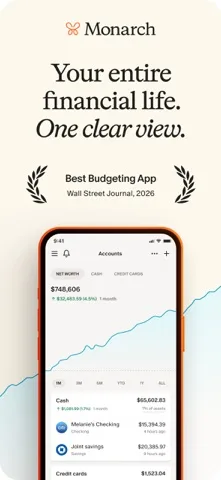
Monarch is the default US recommendation for a reason: sync across 13,000+ institutions, automatic categorization tuned for US spending patterns, budgets, goals, net worth, investments, and household sharing at $99.99/year Core (7-day trial). It replaces what Mint did for Americans and adds the structure Mint lacked. The gaps are method depth (softer than YNAB) and price (no free tier) — but for breadth of US coverage, nothing else leads.
Why we like it
- Widest US bank coverage of any pick here
- Complete system: budgets, goals, net worth, household
- Categorization tuned for US spending
- Reliable sync plus solid manual entry
- Web + mobile apps for the whole household
Limitations
- $99.99/year Core — no free tier
- Softer methodology than YNAB
- US-first — weak outside America
- Plus ($199.99/yr) gates forecasting
- Setup takes a real afternoon
Key details
YNAB
Best for US users who want discipline, not dashboards
YNAB brings zero-based budgeting to US (and Canadian) bank accounts at $109/year with a 34-day trial: every dollar assigned before spending, rules that teach the method, debt and goal tracking built in. Sync reliability is best in the US and Canada. For Americans whose problem is behavior rather than visibility — credit card float, lifestyle creep, subscription sprawl — YNAB's method outperforms every dashboard here. The cost is effort: this app demands a monthly practice.
Why we like it
- Strongest behavior-change record for US overspenders
- Zero-based method with a teaching rule system
- US + Canada bank sync plus manual entry
- Debt payoff tools suit credit-heavy US life
- 34-day trial; student plan available
Limitations
- $109/year — priciest pick here
- Steep learning curve and monthly effort
- No investment depth
- Overkill if you just want visibility
- US/Canada sync most reliable
Key details

Copilot Money
Best for All-Apple US households who prize tracking craft
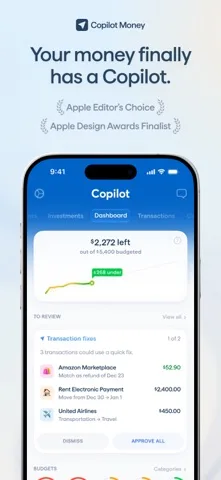
Copilot offers the finest automatic tracking available to Americans — bank sync with exceptional categorization, investment views, and beautiful iPhone/Mac apps — at $95/year. The constraints are absolute: no Android app (a web app exists since Dec 2025, but no native Android experience), US-focused sync, no free tier. For all-Apple US households it is a genuine Monarch rival; for everyone else it is a non-starter. Verify your banks are covered before subscribing.
Why we like it
- Best automatic categorization available
- Investment tracking included
- Beautiful, fast Apple-native apps
- No advances, no upsells, no noise
- $95/year slightly undercuts Monarch
Limitations
- No Android app — hard stop for mixed households
- US-focused bank sync, no free tier
- Limited web presence
- No conversational AI or coaching
- Smaller company than rivals
Key details
Simplifi by Quicken
Best for US users who want sync value
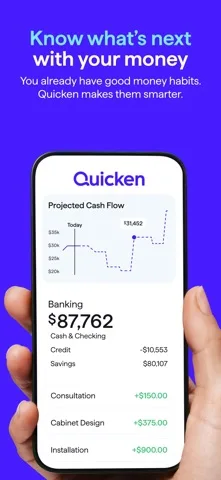
Simplifi is the price-performance pick for Americans: bank-synced spending plan, watchlists, and recurring tracking at $47.88 for year one ($83.88 renewal) — less than half of Monarch or YNAB in year one, still the cheapest sync at renewal. US-only sync, no free tier, no zero-based allocation. For US users who found Mint adequate and just need its successor at a fair price, Simplifi is the rational buy.
Why we like it
- Year-one $47.88 — best first-year sync value
- Spending plan plus strong recurring tracking
- Clean interface, fast setup
- Reliable US bank sync
- Watchlists surface what matters
Limitations
- No free tier — trial only
- US-only bank sync
- Not zero-based
- No investment depth
- Quicken brand carries legacy baggage for some
Key details
Rocket Money
Best for Americans drowning in subscriptions specifically
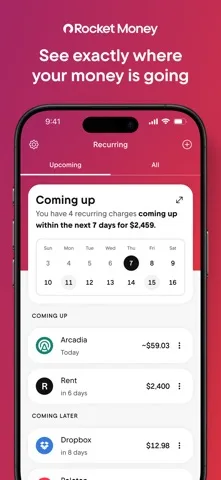
Rocket Money is a US-only subscription weapon: automatic detection, one-list totals, and Premium ($7–$14/month, user-chosen; Premium+ $15/month with fee-free negotiation) cancellation plus bill negotiation — Premium negotiation taking 35–60% of first-year savings. Free tier covers detection. It is not a budgeting app (no debt, goals, or manual entry), so it belongs here as the specialist pick for America's subscription sprawl, not as a budget system.
Why we like it
- Best subscription detection and cancellation flow
- Bill negotiation included in Premium
- Free tier covers detection
- Tuned for US banks and billers
- Zero learning curve
Limitations
- US-only — unavailable to everyone else
- Not a budgeting app in any full sense
- Negotiation takes 35–60% of first-year savings
- Premium up to $168/year for awareness alone
- No manual entry, no web app
Key details
Empower
Best for Americans who want it all free
Empower remains America's best free money dashboard: bank sync, spending categories, net worth, investments, and retirement views at zero cost. Passive like Mint was, with the same limitation — visibility without a planning framework — plus occasional wealth-management outreach. For US users who refuse subscriptions on principle, it is the most app $0 buys.
Why we like it
- Completely free with full US bank sync
- Net worth and investment views included
- Retirement planning tools
- Every platform including web
- Zero setup beyond linking
Limitations
- Passive tracking — no planning framework
- Limited manual entry
- Wealth-management outreach
- US-only in practice
- Visibility that rarely changes behavior
Key details
Hunter Vault Our app
Best for US users who want budgeting without bank aggregation
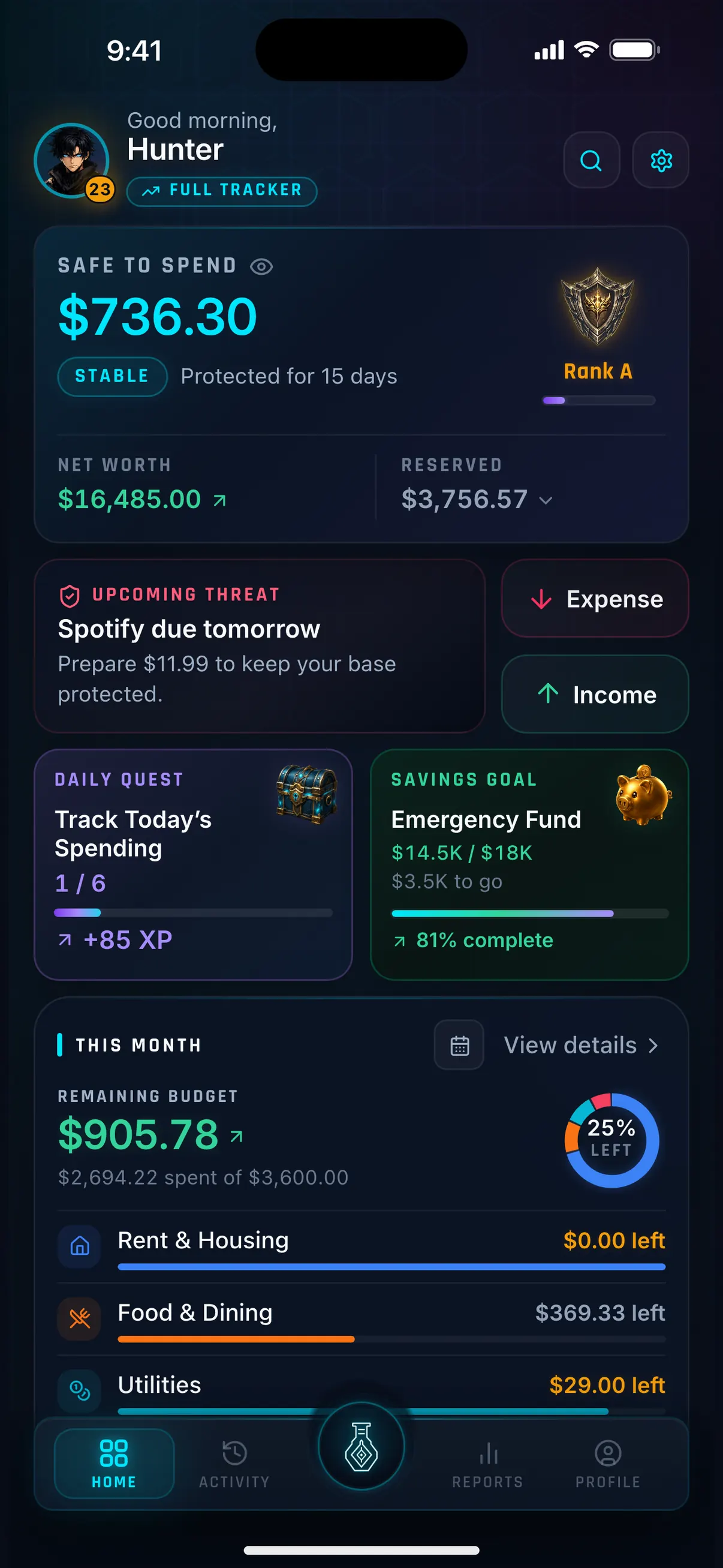
Hunter Vault is the opt-out pick for Americans uneasy about bank aggregation: manual logging (or CSV import) with a gamified habit layer, full tools (budgets, bills, debt, goals), and AI companion options — with no bank connection, ever. Free core covers real budgeting; Awakened Hunter is a one-time $15.99 purchase. Same app worldwide, which also makes it the pick for Americans abroad whose US banks sync poorly from overseas.
Why we like it
- Zero bank-aggregator exposure — nothing to leak
- Gamified habit layer keeps manual logging accurate
- Budgeting never requires a subscription
- Works identically abroad — no geo-restricted sync
- Full tools: budgets, bills, debt, goals
Limitations
- No bank sync — manual entry or CSV import only
- Mobile-first — no web entry interface
- More effort than any synced rival here
- Smaller community than US giants
- Gamification is not for every user
Key details
Context and considerations
US-specific notes: aggregators, coverage, and credit life
Three things make American budgeting different:
Aggregation runs through Plaid (mostly). Nearly every synced pick here connects via Plaid or a similar aggregator — which is convenient and, after widely reported 2024–2026 exposure incidents, worth understanding before you link everything you own. Read privacy policies; use manual apps for accounts you would never link.
Coverage varies by institution size. Big banks (Chase, BofA, Capital One) sync everywhere. Small credit unions, regional banks, and fintechs (Cash App, Venmo balances) break often — verify your specific institutions during each trial week, not after paying annually.
US money is credit-shaped. Card float, subscription sprawl, and 401(k)s dominate American finances in ways the apps reflect: YNAB handles float best, Rocket finds the sprawl, Empower sees the 401(k). Match the app to whichever of the three is actually your problem.
How US bank sync actually works (and breaks)
Every synced pick here connects through an aggregator — Plaid, Finicity, MX, or Mastercard Connect — which logs into your bank as you and normalizes the data. Big US banks work nearly everywhere; small credit unions, regional banks, and fintech balances (Cash App, Venmo) are where sync goes to die.
Two rules follow. First, trial-week coverage check: connect every institution in week one, and disqualify any app that misses one you need. Second, know the privacy shape: your transactions pass through the aggregator to the app, governed by two privacy policies, not one. Manual apps (Hunter Vault, Goodbudget free) skip the entire stack — less convenience, zero exposure.
How to choose the right US budgeting app
Start from your bank reality, then your method:
"I want one app for everything American": Monarch Money ($99.99/yr) — widest US coverage, full household system.
"I want my behavior to change": YNAB ($109/yr) — zero-based discipline that confronts credit float directly.
"I want it cheap": Simplifi ($47.88 first yr) for sync, or Empower (free) for dashboards.
"I'm all-Apple and want the best tracker": Copilot Money ($95/yr).
"Subscriptions are the whole problem": Rocket Money — detection free, cancellation on Premium.
"No aggregator touches my accounts": Hunter Vault — full manual budgeting, gamified habit, works from anywhere.
Trial-week rule: connect every institution you actually use in week one. If your credit union or fintech fails to sync, that app is disqualified no matter how good its marketing is. And for the method-first global ranking behind these US picks, see best budgeting apps.
Frequently asked questions
What is the best budgeting app in the USA?
Monarch Money for the best all-round US system ($99.99/yr), YNAB for the strictest method ($109/yr), Simplifi for the best first-year value sync ($47.88), or Empower free. Copilot Money suits all-Apple households ($95/yr).
Which budgeting apps work with US banks?
Monarch (13,000+ institutions), YNAB, Copilot, Simplifi, Rocket Money, and Empower all sync with US banks via aggregators. Verify your specific bank during the trial — small credit unions and fintechs fail most often.
Is there a free budgeting app for Americans?
Empower is free with full US bank sync, net worth, and investments. Hunter Vault's core is free with manual budgeting and no bank link. Rocket Money's free tier covers subscription detection.
Is it safe to link my US bank account to a budgeting app?
Connections run through regulated aggregators like Plaid, but exposure incidents have occurred — read each privacy policy. For accounts you would never link, manual apps (Hunter Vault, Goodbudget) keep them visible without exposure.
What is the best budgeting app for Americans abroad?
Hunter Vault — no bank sync means no geo-restricted connections to break; it works identically from any country. Manual entry plus CSV import covers foreign accounts synced apps cannot reach.
More Hunter Vault guides
Level up your money
Track spending, complete quests, and build better financial habits — the RPG way. Free to start, no bank linking required.


Free to start · No account needed · Works offline