Best Budgeting Apps for ADHD in 2026 (Low Friction, High Dopamine)
Most budgeting apps assume consistency and punish inconsistency — the exact opposite of what ADHD brains need. The right app for ADHD logs an expense in seconds, shows progress visibly, survives a missed week without a guilt spiral, and rewards showing up at all. This guide ranks apps by those criteria specifically: friction, feedback, forgiveness, and fun. (General information only — not medical advice. ADHD affects everyone differently; pick what fits your brain.)
On this page
Our picks for different budgeters
Side-by-side comparison
| App | Best for | Price | Bank sync | Manual entry | Debt tracking | Savings goals | Platforms |
|---|---|---|---|---|---|---|---|
 Hunter Vault Our app | Gamified logging that rewards showing up | Free (one-time Awakened Hunter upgrade; optional subscriptions) | No | Yes | Yes | Yes | iOS, Android |
 Monarch Money | Automated tracking, minimal effort | $14.99/mo or $99.99/yr (Core) | Yes | Yes | Yes | Yes | iOS, Android, Web |
 PocketGuard | One safe-to-spend number | $12.99/mo or $74.99/yr (Plus) | Yes | Yes | Yes | Yes | iOS, Android, Web |
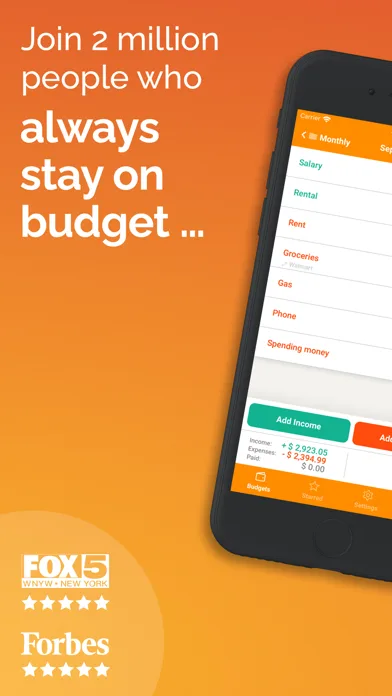
 Fudget | Simplest possible list | Free (Plus $19.99/yr) | No | Yes | No | Limited | iOS, Android |
 YNAB | Strict rules, if structure helps | $14.99/mo or $109/yr | Yes | Yes | Yes | Yes | iOS, Android, Web |
 Rocket Money | Passive awareness, zero homework | Free / Premium $7–$14/mo | Yes | No | No | Limited | iOS, Android |
Hunter Vault Our app Manual entry, debt & savings
Monarch Money Manual entry, debt & savings
PocketGuard Manual entry, debt & savings
Fudget Manual entry, debt & savings
YNAB Manual entry, debt & savings
Rocket Money Manual entry, debt & savings
Table last reviewed November 2026. Verify current pricing and features with each app's website — details may change.
How we evaluated these apps
We score every app against the same criteria, so the recommendations stay consistent and comparable.
How quickly you can set up a budget, log spending, and understand where your money goes.
Budgeting flexibility, expense-tracking quality, debt tracking, and savings-goal features.
Bank-sync availability and reliability, the manual-entry experience, and CSV / import support.
Pricing structure, free tiers, and whether paid plans are worth it for most people.
How each app handles your financial data, and whether bank linking is required at all.
iOS / Android / web availability, currency and localization support, and who the app is built for.
App-by-app breakdown
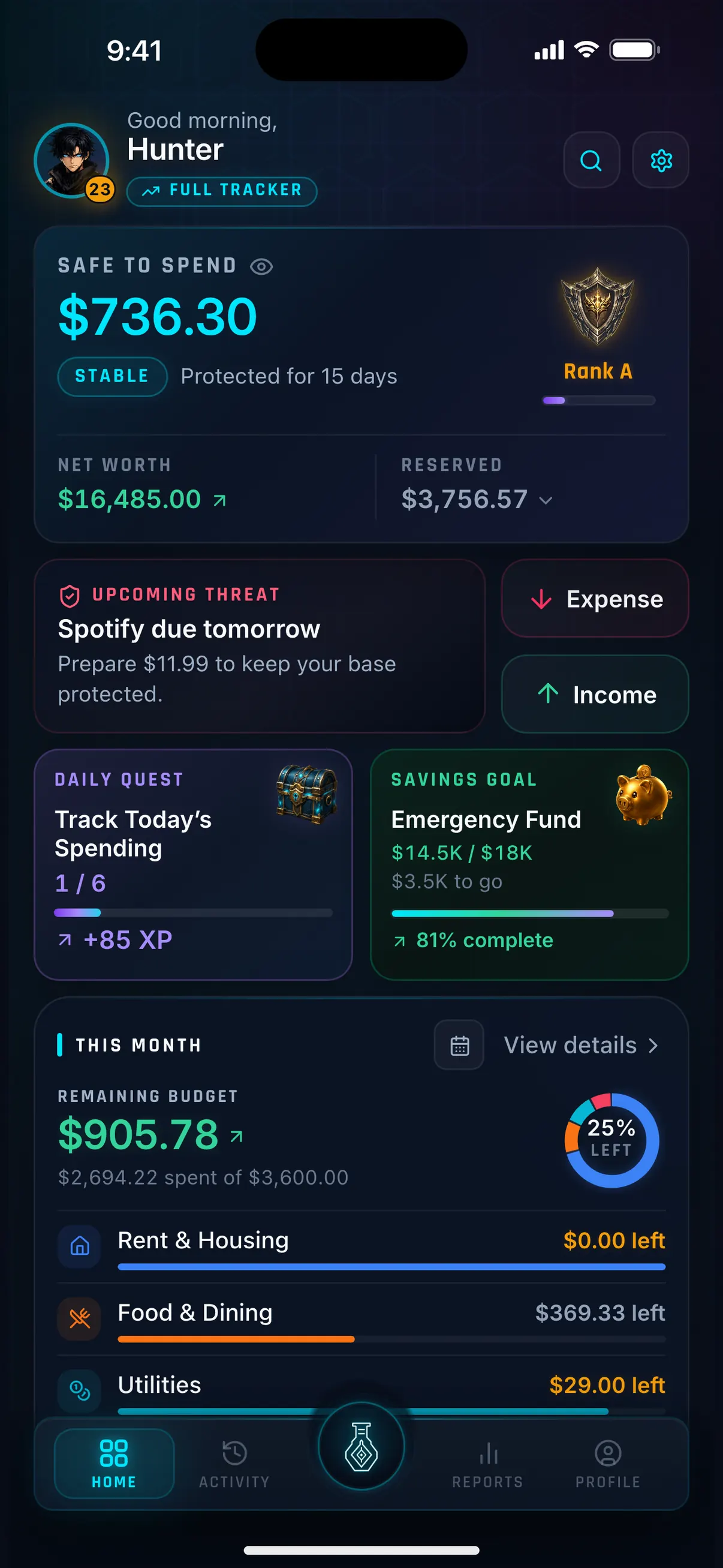
Hunter Vault Our app
Best for ADHD brains that need logging to feel rewarding, not punishing
Hunter Vault is designed around the exact failure mode of ADHD budgeting: apps that demand consistency and shame lapses. Logging earns XP and Gold through daily and weekly quests; streaks survive no-spend days; ranks climb from E to S as showing up compounds. Missed a week? The game waits — no red warnings, no broken chain catastrophe. Manual entry (no bank link) keeps amounts visible, which is the awareness passive apps never deliver. Free core covers real budgeting; Awakened Hunter is a one-time $15.99 purchase.
Why we like it
- Dopamine loop built in: quests, XP, streaks, ranks
- Forgiving by design — lapses do not cascade into guilt
- Logging takes seconds, rewarded immediately
- No bank link — amounts stay visible, not backgrounded
- Budgeting never requires a subscription
Limitations
- Still requires manual logging — automation is zero
- Mobile-first — no web entry interface
- Gamification helps most ADHD users, not all
- Free core has limits (removed by one-time purchase)
- Smaller community than mainstream rivals
Key details
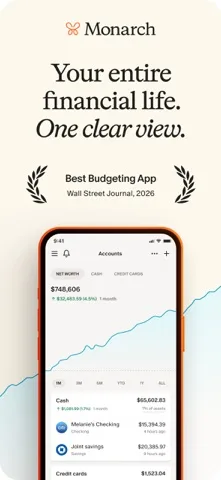
Monarch Money
Best for ADHD brains that will not log manually, reliably or at all
Monarch removes the failure point entirely: bank sync imports and categorizes everything, so the budget exists whether you open the app or not. Dashboards, goals, and recurring views run on autopilot at $99.99/year Core. The honest trade is awareness — money moves in the background, which is exactly what manual advocates criticize. But for ADHD users whose realistic alternative is no budget at all, an automated imperfect system beats an abandoned perfect one.
Why we like it
- Zero logging required — automation carries the system
- Complete dashboard when you do check in
- Goals and recurring views run themselves
- Reliable US bank sync and categorization
- Household sharing for partnered users
Limitations
- $99.99/year Core — no free tier
- Passive tracking builds little awareness
- Primarily US-focused for bank sync
- No gamification or habit rewards
- Easy to pay for and never open
Key details
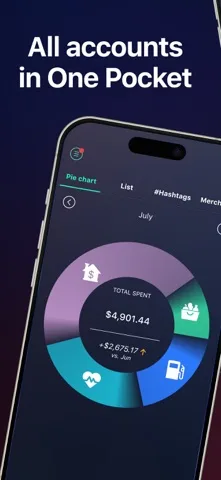
PocketGuard
Best for ADHD brains that need exactly one number
PocketGuard collapses the entire budget into "safe to spend" — one number, updated from bills, goals, and income. No categories to maintain, no allocation sessions, no monthly setup ritual to dread. Plus is $12.99/month or $74.99/year. Bank sync covers the US, Canada, and the UK. For ADHD users overwhelmed by multi-envelope systems, radical simplification is the feature.
Why we like it
- One number — minimal cognitive load
- No setup ritual, no category maintenance
- Bank sync in US, Canada, UK
- Debt payoff tracking included
- Pace feature shows spending rhythm gently
Limitations
- Plus required for full experience ($74.99/yr)
- One number hides useful detail some months
- No gamification or habit rewards
- Less goal depth than Monarch
- Free tier limited
Key details
Fudget
Best for ADHD brains that need the smallest possible tool
Fudget is a list: money in, money out, balance left. No accounts, no sync, no categories, no setup — open it and type. Free, with Plus at $19.99/year or $14.99 per 6 months. It offers no rewards, no automation, and no forgiveness features, which sounds bad until you realize its cognitive load is near zero: there is nothing to fall behind on because there is nothing to maintain.
Why we like it
- Near-zero cognitive load — nothing to maintain
- Opens and logs in seconds
- No account, no sync, no connection needed
- Free tier usable; Plus is cheap ($19.99/yr)
- Impossible to "fall behind" in any structural sense
Limitations
- No rewards, reminders, or habit features
- No debt tracking, minimal goals
- No automation of any kind
- No sync across devices
- Too bare once finances get complex
Key details
YNAB
Best for ADHD brains that thrive under clear external rules
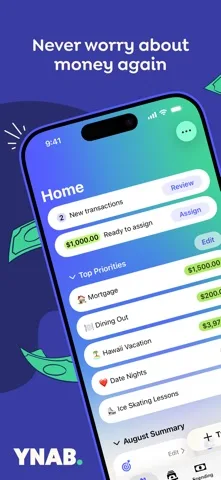
YNAB is the high-risk, high-reward pick: zero-based budgeting with four explicit rules, at $109/year. For some ADHD users, external structure is exactly what works — the rules carry decisions the brain will not make alone. For others, YNAB is the fastest route to budgeting shame ever built: missed a week and the red overspending flags feel personal. Try the 34-day trial honestly; if week two feels punishing rather than clarifying, switch to a forgiving pick instead.
Why we like it
- Clearest external structure of any method
- Rules replace in-the-moment decisions
- Strongest behavior-change record overall
- Excellent teaching resources
- Bank sync plus manual entry
Limitations
- $109/year — priciest pick here
- Unforgiving feel — red flags read as personal failure
- Steep learning curve and monthly effort
- High abandonment risk for ADHD users specifically
- US/Canada bank sync most reliable
Key details
Rocket Money
Best for ADHD brains that need passive awareness with zero homework
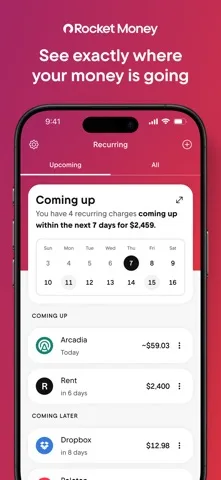
Rocket Money asks nothing: connect a US bank account and it surfaces subscriptions, balances, and spending with no logging, no categories to maintain, no method to learn. Free tier covers detection; Premium ($7–$14/month) adds cancellation and negotiation, and Premium+ ($15/month) adds an AI assistant with fee-free negotiation. It will not budget, plan, or change behavior — but as a "tell me what is happening" layer for brains that cannot sustain anything else, it has a legitimate place. US-only.
Why we like it
- Zero effort — nothing to log, ever
- Subscription detection catches forgotten charges
- Free tier covers the core awareness use
- Cancellation help on Premium
- No method to learn or maintain
Limitations
- US-only
- No budgeting, debt, or goal features
- No manual entry at all
- Premium up to $168/year for awareness alone
- Passive by design — builds no habits
Key details
Should ADHD budgeters automate with bank sync?
Bank sync removes the task ADHD brains drop first: logging. Monarch, PocketGuard, and Rocket Money keep a budget alive through months you never open the app — which, honestly, is the only reason some ADHD users have any budget at all.
The cost is awareness: backgrounded money gets backgrounded attention, and several ADHD budgeters report sync made overspending easier to ignore. Manual picks (Hunter Vault, Fudget) force the confrontation sync skips — but only work if the habit layer (game loop, radical simplicity) carries you. If you have never sustained manual logging, start synced. You can always graduate to manual once the habit exists.
How to choose the right ADHD budgeting app
Match the app to your failure mode, not your aspirations:
"I quit when it stops being fun": Hunter Vault — the game loop is the retention mechanism. Quests and streaks reward showing up, and lapses do not cascade.
"I will not log, ever": Monarch Money — automation carries the whole system. Accept lower awareness in exchange for a budget that exists.
"Systems overwhelm me": PocketGuard (one number) or Fudget (one list). Radical simplification beats comprehensive abandonment.
"Rules actually help me": YNAB — but only with a two-week honesty check. If the red flags feel shaming rather than clarifying, leave fast.
"I have zero capacity right now": Rocket Money free tier (US) — passive awareness as a floor while you recover, not a system to feel guilty about.
Three rules for any pick: start with three categories maximum (add more never); forgive the first missed week in advance, in writing; and judge the app at day 30 by whether you opened it, not by whether you were perfect. Our guide to budgeting with ADHD covers the method side in depth.
Frequently asked questions
What is the best budgeting app for ADHD?
Hunter Vault for gamified, forgiving manual budgeting; Monarch Money for full automation with zero logging; PocketGuard for one-number simplicity. Match the app to your failure mode: fun-seekers, non-loggers, and overwhelm-prone brains need different tools.
Why is budgeting so hard with ADHD?
Standard budgeting demands consistency, delayed reward, and tolerance for tedium — three things ADHD brains find hardest. Apps built for neurotypical consistency (strict methods, shame-coded alerts) fail hardest. Tools with fast logging, visible progress, and forgiving lapses fit better.
Is YNAB good for ADHD?
For some: its strict external rules replace decisions the ADHD brain struggles to make. For others it is punishing — red overspending flags feel personal and trigger abandonment. Try the 34-day trial with a two-week honesty check, and leave fast if it feels bad.
Is there a free budgeting app for ADHD?
Hunter Vault's core is free with the full gamified habit layer. Fudget is free for minimal list budgeting. Rocket Money's free tier gives passive awareness (US only). All three avoid the subscription-before-proof trap.
Do I need a special app, or just a better method?
Both help, but the app matters more than ADHD budgeters expect: friction and feedback design decide whether you open it on day 30. Pair whichever app you choose with an ADHD-friendly method — few categories, pre-forgiven lapses, visible progress.
More Hunter Vault guides
Level up your money
Track spending, complete quests, and build better financial habits — the RPG way. Free to start, no bank linking required.


Free to start · No account needed · Works offline