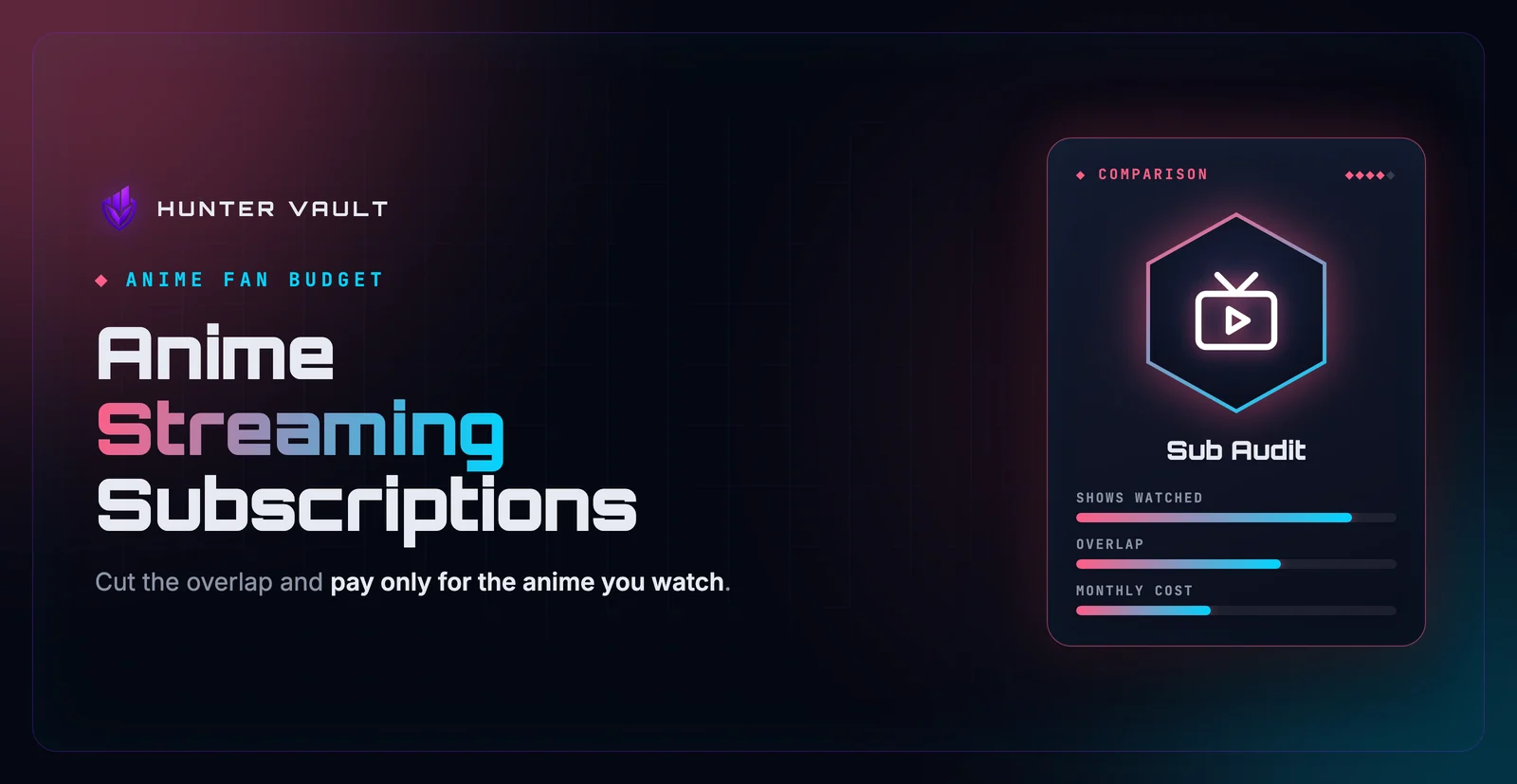
- Most anime fans overpay by stacking overlapping subscriptions they barely watch
- Keep one anchor service; add a second only during seasons with must-watch exclusives, then cancel it
- Rotating in and out beats holding everything year-round — there's no contract to lose
- The test: if you can't name a show you watched on a service last month, you're overpaying for it
- Crunchyroll's free tier is gone, but free ad-supported apps and library apps still carry some legal anime
Streaming is the quietest line in an anime budget. A figure purchase you feel; a $10 subscription just… recurs, month after month, whether you watched anything on it or not. Stack a few — Crunchyroll for the simulcasts, Netflix for its originals, maybe another for one exclusive — and you’re paying more for the privilege of watching anime than for any actual show. And the temptations keep multiplying: Crunchyroll passed 21 million paid subscribers in 2026, up from 17 million a year earlier (Anime News Network, retrieved 2026-09-01), as more services compete for a slice of your monthly spend.
The fix isn’t to stop watching. It’s to stop paying for anime you’re not watching. This guide is how to audit your streaming, cut the overlap, and rotate services so you only ever pay for what you’re actually using. It’s the streaming slice of the wider anime hobby budget.
Quick Answer: Anchor One, Rotate the Rest
The whole strategy in one line: keep one anchor subscription, and rotate the others in and out by season.
- Pick your anchor — the one service you’d keep if you could only have one.
- Add a second only when a season has a must-watch exclusive you can’t get on your anchor.
- Cancel it when the season ends — you can resubscribe later (just watch anything that’s about to leave first).
Because anime services have no lock-in contract, rotating costs you nothing and saves the most. Everything below is how to do it well.
Why Fans Overpay Without Noticing
Streaming overspending is almost always invisible, for three reasons:
- It recurs silently. Unlike a purchase you decide on, a subscription charges automatically. You’re never asked “do you still want this?” — so an unused service can bill you for a year.
- Catalogs overlap. Many popular series are available on more than one platform, so paying for several often means paying twice for the same shows.
- FOMO keeps them all. You hold onto a subscription “just in case” a season you like drops — but “just in case” is a monthly fee for a maybe.
None of these are a spending decision you’d make consciously. They’re the default of set-and-forget billing — which is exactly what a subscription audit is built to fix.
The fastest way to spot a wasted subscription: for each anime service you pay for, try to name a show you actually watched on it in the last month. If you can’t, you’re funding a catalog you’re not using. This one question usually finds at least one cancellable subscription immediately.
Audit Your Anime Streaming, Step by Step
List every anime service you pay for
All of them — the simulcast service, the general streamers you keep partly for anime, any you forgot about. Note each one’s monthly cost and add up the total. The total is usually higher than fans expect.
Run the 'name a show' test on each
For each service, name what you watched on it last month. The ones you can’t answer for are your cancellation candidates. Be honest — “I might watch something” doesn’t count.
Pick your anchor
Choose the single service that covers most of your watching — usually the one with the simulcasts or catalog you use most. This is the one you keep year-round.
Cancel the rest for now
Cancel everything that failed the test. You’re not losing them forever — you’re pausing until a season actually needs them. Resubscribing later takes two minutes.
Set a per-season review
Before each new anime season, check what’s airing and whether any must-watch exclusive justifies temporarily adding a second service. Add it, watch, then cancel when the season wraps.
Rotating Beats Stacking
The core money move is rotation. Instead of paying for three services all year “to be safe,” you pay for one all year and add a second for the month or two it’s actually needed.
The math is simple and it favors rotation heavily. Holding a second service year-round costs you twelve months of fees; adding it for the one season with an exclusive you want costs you two or three. Same shows watched, a fraction of the cost — and because there’s no contract, the only effort is remembering to cancel when the season ends. Put that cancellation date in a bill tracker so it doesn’t quietly renew into another year.
Don’t Forget the Free and Cheap Options
Before adding any paid service, check what you can watch for less:
- Free ad-supported apps — some free, ad-supported streaming apps carry anime, though the selection is usually older or limited. Crunchyroll is no longer one of them: it ended its free ad-supported plan on December 31, 2025 (Android Authority), so watching there now requires a paid plan.
- Library apps — many local libraries offer free streaming apps with anime catalogs, entirely free with a library card.
- What you already pay for — general streamers you keep for non-anime reasons often have a solid anime section, which may cover your casual watching without a dedicated anime sub at all.
Layering a free app or library app under a single paid anchor covers a lot of anime watching for the price of one subscription. That’s the streaming budget most people are actually looking for — and the savings free up room for the figures or conventions you’d rather spend on.
This is general educational content, not financial advice. Choose streaming services that fit your budget and viewing. Service catalogs, tiers, and prices change — check current details before subscribing.
Final Takeaway
Anime streaming is where fans overpay most quietly, because subscriptions bill themselves whether you watch or not. The fix is an anchor-and-rotate strategy: keep one service year-round, add others only for the seasons that need them, and lean on free apps and library apps underneath.
Run the “name a show” test on your subscriptions today — it takes five minutes and almost always finds money you’re wasting. Then anchor, rotate, and put your streaming spend back where it belongs: on anime you actually watch. Back to the anime hobby budget for the rest.
Frequently Asked Questions
How do I save money on anime streaming?
Audit what you’re actually paying for, keep only the services you watch regularly, and rotate the rest instead of holding them all year. Most anime fans pay for overlapping subscriptions they barely use. Pick one primary service for the bulk of your watching, add a second only during seasons with must-watch exclusives, and cancel it when the season ends. Rotating beats stacking.
Is it worth paying for multiple anime streaming services?
Usually only if you have specific exclusives you watch on each. Because catalogs overlap heavily, paying for several year-round often means paying twice for shows you could watch on one. A better approach is one anchor subscription plus short-term additions only when a service has a current exclusive you genuinely want — then cancel once you’ve watched it.
How much should I spend on anime streaming per month?
Enough for the services you actually use, and no more. For many fans that’s a single subscription; heavy watchers might justify two. The test is simple: if you can’t name a show you watched on a service in the last month, you’re overpaying for it. Match your spend to your real viewing, not to a fear of missing out.
Should I cancel anime subscriptions I’m not using?
Yes — an unused subscription is pure waste, and anime services are easy to resubscribe to later with no penalty. Because there’s no long-term contract, you lose nothing by cancelling now and returning when a season you care about drops. Licensed shows do sometimes leave a service, so if one is about to expire, watch it before you cancel. Rotating in and out is the single biggest streaming saving for most fans.
What’s the cheapest way to watch anime legally?
Check what free, ad-supported streaming apps and your local library’s streaming app carry, then keep just one paid subscription for the simulcasts or exclusives you care about. Note that Crunchyroll ended its free ad-supported plan on December 31, 2025, so watching there now needs a paid plan. Rotating a single paid service in and out by season keeps legal anime watching genuinely affordable.