Finding the best gamified personal finance app for beginners in 2026 can feel overwhelming.
Most finance apps are useful, but they can also feel boring, confusing, or hard to stick with. You start strong, track your expenses for a few days, maybe set a budget, and then slowly fall back into old habits.
That is exactly why gamified finance apps are becoming more popular.
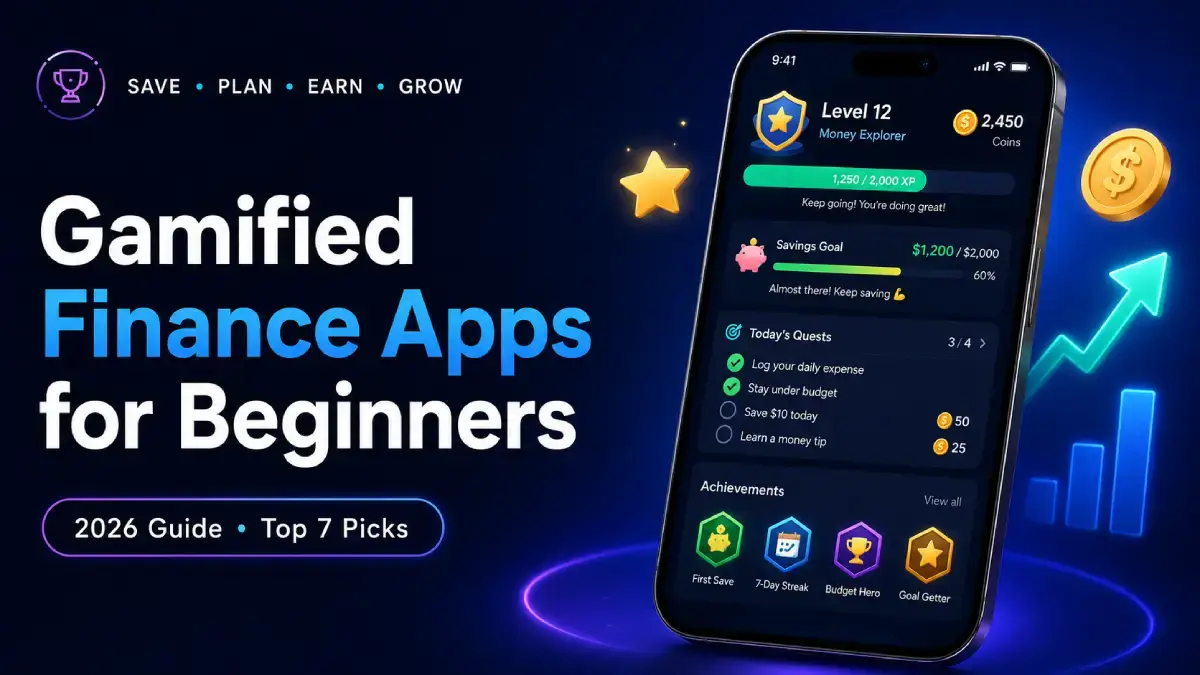
Instead of making money management feel like a chore, these apps use things like quests, rewards, levels, progress bars, and challenges to make personal finance feel more motivating.
For beginners, that small change can make a big difference.
Because the hardest part of managing money is not always knowing what to do. It is staying consistent long enough to build better habits.
In this guide, we’ll look at some of the best gamified personal finance apps for beginners, including apps that focus on RPG-style progress, visual tracking, automated saving, and simple budgeting.
Hunter Vault is our own app, and it appears on this list. We’ve included it because we genuinely believe it fits beginners well — but it’s our product, so weigh it against the other picks and choose what actually works for you.
What Is a Gamified Personal Finance App?
A gamified personal finance app uses game-like features to help you manage your money.
Instead of only showing numbers, charts, and transactions, these apps make money habits feel more interactive.
They may include:
- XP or experience points
- Levels and progress bars
- Daily missions
- Rewards and achievements
- Streaks and challenges
- Visual progress systems
The goal is simple: make saving, budgeting, tracking expenses, and paying down debt feel more rewarding.
Instead of thinking, “I have to update my budget again,” you start thinking, “I completed another step toward my goal.”
That mindset shift can make personal finance feel less stressful and more approachable. (If you want the step-by-step version, here’s how to gamify your finances.)
Why Beginners Struggle With Money
A lot of beginners do not fail because they are lazy. They fail because traditional budgeting can feel overwhelming.
Common problems include:
- Budgeting feels restrictive
- Progress is hard to see
- There is no instant reward
- Expense tracking feels boring
- It requires too much discipline at the start
When there is no motivation, consistency breaks.
You might save money for a few days, track your spending for a week, or create a budget once. But if the process feels boring or stressful, it is easy to stop.
How Gamification Helps
Gamification helps by making small money actions feel rewarding.
For example, instead of only saving money, you might complete a savings quest. Instead of only tracking an expense, you might earn progress toward your next level.
Gamified finance apps can help by:
- Giving instant feedback
- Making progress easier to see
- Turning habits into daily missions
- Creating a sense of achievement
- Making money management feel less intimidating
This is especially helpful for beginners because early progress matters.
When you feel like your small actions count, you are more likely to keep going.
Key Features to Look For in a Gamified Personal Finance App
Before choosing an app, it helps to know which features actually matter.
XP, Levels, and Rewards
The best gamified finance apps reward you for small actions, such as:
- Saving money
- Tracking expenses
- Staying within budget
- Avoiding impulse buys
- Paying down debt
These small rewards can help you stay motivated, especially when your bigger financial goals take time. (If debt is the goal that keeps stalling, our roundup of the best debt payoff tracker apps compares apps built specifically for that.)
Habit Tracking and Quests
Look for apps that include systems like:
- Daily missions
- Weekly challenges
- Habit streaks
- Savings quests
- Budget goals
These features make money management feel like part of your daily routine instead of a one-time task.
Simple Beginner-Friendly Design
If an app is too complicated, beginners quit fast.
A good beginner finance app should be:
- Easy to navigate
- Quick to set up
- Simple to understand
- Clear about what action to take next
The best app is not always the one with the most features. It is the one you will actually use.
Quick Comparison Table
Here is a quick comparison before we go into each app in more detail.
| App | Best For | Gamification Style | Strongest Feature | Best Fit |
|---|---|---|---|---|
| Hunter Vault | Beginners who want finance to feel like an RPG | Quests, leveling, boss battles, character progress | Makes money habits feel motivating and game-like | Best for habit-building, savings goals, expense tracking, and beginner budgeting |
| Habitica | People who want to gamify their whole life | RPG tasks, XP, avatar, parties | Great for habits, productivity, and daily discipline | Best for people who want to turn everyday tasks into a game |
| Fortune City | Visual learners and cozy game fans | City-building through expense tracking | Makes tracking expenses more fun and visual | Best for people who want to see their spending turn into visual progress |
| YNAB | Serious budgeting discipline | System-based progress, not traditional gamification | Strong budgeting method and money discipline | Best for people who want a structured budgeting system |
| Qapital | Automated saving | Rules, goals, and triggers | Helps users save without thinking about it | Best for people who want saving to happen automatically |
| PocketGuard | Simple spending control | Minimal gamification | Shows how much you can safely spend | Best for people who want a simple answer before spending |
| Goodbudget | Envelope budgeting beginners | Structured envelopes, not game-based | Easy-to-understand category budgeting | Best for people who like planning money by categories |
Best Gamified Personal Finance Apps for Beginners in 2026
1. Hunter Vault: Level Up Finance
Best for beginners who want personal finance to feel like an RPG
Hunter Vault is built around one simple idea: What if managing your money felt like leveling up your character?
Instead of treating budgeting like a boring spreadsheet, Hunter Vault turns personal finance into a progression system inspired by RPGs and anime-style leveling experiences. It is designed for people who want to build better money habits but struggle with consistency.
You do not just track expenses. You complete quests, build discipline, and slowly improve your financial character.
Hunter Vault combines:
- RPG-style leveling
- Daily money quests
- Savings goals
- Budget tracking
- Expense tracking
- Debt payoff progress
- Boss battle-style challenges
- Character progression
- Offline and private money tracking
The strongest part of Hunter Vault is its focus on motivation. Most finance apps help you track your money. Hunter Vault helps you feel like you are training your financial discipline. That makes it especially beginner-friendly because the app does not only focus on numbers. It gives users a reason to come back.
Why beginners may like it
Beginners often struggle with budgeting because they lose motivation. Hunter Vault helps solve this by making small money actions feel rewarding. Logging an expense, saving money, staying within budget, or paying down debt can all feel like progress toward a bigger goal.
Instead of asking: “Did I update my budget today?”
The experience becomes: “Did I complete my quest today?”
That small shift can make personal finance feel much more approachable.
Best for
Hunter Vault is best for beginners who like games, anime, RPGs, Solo Leveling-style progression, or anyone who wants a finance app that feels more motivating than a normal tracker.
Possible downside
Hunter Vault is best suited for beginners who want motivation, habit-building, savings goals, expense tracking, and beginner budgeting rather than a traditional spreadsheet-style finance tool. But for building consistency and making money habits feel more rewarding, Hunter Vault has a very strong niche.
Try Hunter Vault here: https://huntervault.app/
2. Habitica
Best for people who want to gamify their entire life
Habitica is one of the most popular gamified habit apps. It turns your real-life tasks, habits, and goals into an RPG-style experience where you can earn rewards and build consistency.
With Habitica, users can:
- Create tasks
- Build habits
- Earn XP
- Level up
- Customize an avatar
- Join parties
- Complete challenges
The main advantage of Habitica is that it is not only about money. You can use it for school, work, fitness, chores, habits, and general self-improvement.
Why beginners may like it
If you are new to self-discipline in general, Habitica can be a fun starting point. You can create money-related tasks like:
- Track expenses today
- Save ₱100
- Avoid impulse spending
- Review your weekly budget
- Pay down debt
This makes it easier to connect your financial goals with your daily routine.
Possible downside
Habitica is not built specifically for personal finance. You can gamify money habits manually, but it does not deeply understand budgets, savings goals, accounts, debt, or spending categories by default. That is where a finance-focused gamified app like Hunter Vault may be a better fit for money-specific goals.
Learn more about Habitica here: https://habitica.com/static/home
3. Fortune City
Best for people who like visual progress
Fortune City is a finance app that turns expense tracking into a city-building game. The concept is simple: Track expenses → build a city. This makes expense tracking more visual and fun. Instead of only seeing a list of transactions, you can watch your financial activity turn into a growing city.
Why beginners may like it
Fortune City is beginner-friendly because it makes expense tracking less intimidating. If you enjoy cozy games, city builders, or visual progress systems, you may find it easier to stay consistent with this kind of app. It is especially useful for people who want to become more aware of where their money goes.
Possible downside
Fortune City is more focused on expense tracking and visual bookkeeping. It may not feel as deep if you want a full financial growth system with debt tracking, savings goals, quests, and long-term habit-building.
Learn more about Fortune City here: https://sparkful.app/fortune-city
4. YNAB
Best for serious budgeting discipline
YNAB, short for You Need A Budget, is not fully gamified in the traditional sense. It does not feel like an RPG, but it does have a strong system-based approach to money management. YNAB’s method is built around assigning your money to categories based on your priorities and upcoming expenses.
Its core rule is: Give every dollar a job.
That means every amount of money should have a clear purpose before you spend it.
YNAB’s well-known rules include:
- Give every dollar a job
- Embrace true expenses
- Roll with the punches
- Age your money
Why beginners may like it
YNAB is powerful for people who want to become serious about budgeting. It teaches users to be intentional instead of reactive with money. It can help beginners understand that budgeting is not just about restricting spending. It is about deciding what your money should do before it disappears.
Possible downside
YNAB can feel harder to learn compared to simpler apps. For beginners who get overwhelmed easily, the learning curve may feel too steep at first. It is great for discipline, but it is not the most fun or game-like option.
Learn more about YNAB here: https://www.ynab.com/ — or see how Hunter Vault compares to YNAB →
5. Qapital
Best for automated saving
Qapital focuses on helping users save automatically through goals, rules, and triggers. It is useful because it reduces the need for manual effort. Instead of relying only on discipline, users can set rules that move money toward their goals automatically.
Examples include:
- Saving a small amount regularly
- Saving when a trigger happens
- Setting a goal and automating progress
- Using rules to make saving feel easier
Why beginners may like it
Qapital is helpful for beginners who struggle to save manually. Automation removes friction, which can make saving feel less painful. This is especially helpful if you know you want to save but often forget or spend the money first.
Possible downside
Qapital is less game-like compared to apps that use quests, XP, levels, or visual world-building. It is more about automation than RPG-style motivation.
Learn more about Qapital here: https://www.qapital.com/
6. PocketGuard
Best for simple spending control
PocketGuard is designed to help users understand how much money they can safely spend. The appeal of PocketGuard is simplicity. Instead of giving you a complicated budgeting system, it helps answer one important question: “How much can I safely spend?”
Why beginners may like it
PocketGuard is useful for people who feel overwhelmed by budgeting. Some beginners do not want deep spreadsheets, complex rules, or manual category planning. They just want to know whether they are okay to spend or if they need to slow down.
Possible downside
PocketGuard is beginner-friendly, but it is not strongly gamified. It may help users manage money, but it may not create the same emotional motivation as a game-like system.
Learn more about PocketGuard here: https://pocketguard.com/
7. Goodbudget
Best for envelope budgeting beginners
Goodbudget is based on the envelope budgeting method. Envelope budgeting is simple: You divide your money into different “envelopes” or categories, such as:
- Food
- Rent
- Transportation
- Savings
- Debt payment
- Fun money
Once an envelope runs low, you know you need to be careful.
Why beginners may like it
Goodbudget works well for people who want structure without too much complexity. It is easy to understand because the envelope method feels physical and practical. You can clearly see where your money is supposed to go.
Possible downside
Goodbudget is not really gamified. It is structured and beginner-friendly, but it does not offer the same sense of quests, XP, progression, or rewards.
Learn more about Goodbudget here: https://goodbudget.com/
How to Choose the Right App
The best app depends on your personality and what kind of motivation you need.
If you love games, RPG systems, quests, and character progress, a gamified app like Hunter Vault may be a strong fit.
If you want to gamify your whole life, Habitica is a great option.
If you like visual progress, Fortune City may feel more fun.
If you want serious budgeting structure, YNAB or Goodbudget may be better choices.
If you want saving and spending control to feel easier, Qapital and PocketGuard are worth considering.
Here is a simple way to think about it:
- Love games? Choose an app with quests, XP, and levels.
- Love structure? Choose a budgeting system like YNAB or Goodbudget.
- Want simple? Choose an app focused on automation or spending control.
- Love visuals? Choose an app that shows your progress in a creative way.
And if you’re a student working with a tight, irregular budget, the best finance apps for students who hate budgeting narrows the list down further.
The right app is the one that makes you want to keep going.
Why Gamified Apps Are the Future of Personal Finance
Finance is changing.
People do not want to feel punished every time they open a money app. They do not want confusing dashboards, complicated spreadsheets, or budgeting systems that make them feel guilty.
They want tools that feel simple, motivating, and rewarding.
Gamified finance apps work because they turn small actions into visible progress — here’s how they compare to traditional budgeting apps.
Saving money becomes a quest. Tracking expenses becomes a habit. Paying down debt becomes a challenge. Staying consistent starts to feel like leveling up.
That is powerful because personal finance is not only about math.
It is also about behavior.
The more enjoyable the process feels, the easier it becomes to stay consistent.
Conclusion
Choosing the best gamified personal finance app for beginners in 2026 can completely change the way you manage money.
Instead of opening a finance app and feeling stressed, you can turn your money habits into something that feels like progress.
You can complete daily quests, earn rewards, build better habits, track your spending, save toward real goals, pay down debt, and slowly level up your financial life.
The best app is not always the one with the most features. It is the one that makes you want to come back, stay consistent, and keep improving.
Whether you like RPG-style quests, visual city-building, automated savings, or simple budgeting systems, there is a tool that can make personal finance feel less intimidating.
At the end of the day, managing money does not have to feel like a punishment.
It can feel like a game where every small win helps you become stronger, smarter, and more confident with your finances.
Frequently Asked Questions
What is the best gamified personal finance app for beginners in 2026?
The best gamified personal finance app depends on your goals. If you want RPG-style money management with quests, levels, and character progress, Hunter Vault is a strong option. If you want to gamify your entire life, Habitica may be a better fit. If you prefer visual expense tracking, Fortune City is worth considering.
Are gamified finance apps effective?
Yes, gamified finance apps can be effective because they improve motivation and consistency. They make small financial actions feel rewarding, which can help beginners build better habits over time.
Are gamified finance apps safe to use?
Most reputable finance apps use security measures to protect users, but you should always check app permissions, privacy policies, reviews, and whether the app requires bank connection before using it.
Can gamification help me save more money?
Yes, gamification can help you save more money by making saving feel more rewarding. Quests, streaks, goals, and progress bars can encourage you to stay consistent.
Are free finance apps enough for beginners?
Free finance apps can be enough for beginners, especially if your main goal is to track expenses, build habits, or start saving. Premium features may be useful later if you want more automation, deeper insights, or advanced tools.
What makes Hunter Vault different?
Hunter Vault focuses on RPG-style money habits. Instead of only tracking numbers, it turns budgeting, saving, expense tracking, and debt payoff into quests, levels, boss battles, and character progress.
Do I need a gamified finance app to manage money?
No, you do not need one. Traditional budgeting apps, spreadsheets, or notebooks can also work. But if you struggle with motivation or consistency, a gamified finance app can make the process feel easier and more enjoyable.