- Yes — RPG and anime-style budgeting apps exist, and the category is growing
- They turn money tracking into progression: quests, XP, streaks, ranks, or building something that grows
- The styles differ a lot — city-builders, pet/character keepers, and RPG progression systems
- What to check: the game feeling, whether it syncs your bank or stays offline, and what's free
- The best one is the one whose progression loop you'll actually come back to
There’s a specific kind of frustration behind this search: you happily keep a daily streak alive in a game for months, but a budgeting app loses you by Thursday. The difference isn’t you. Games are built to reward showing up. Most finance apps just tally what you did wrong.
So the question makes sense: is there a budgeting app that feels like an RPG? The short answer is yes — there’s a small, growing category of money apps built around game-style progression. This guide covers what to look for, the kinds of apps that exist, and how to tell which one fits you.
Quick Answer: Is There an RPG Budgeting App?
Yes. A handful of gamified finance apps borrow RPG and anime-style progression — quests, XP, ranks, streaks, and characters — to make budgeting feel like leveling up rather than doing homework. They come in a few flavors: city-builders that grow as you track, pet or character keepers you maintain by staying on budget, and RPG progression systems where your money habits level up a character. The right one depends on which game feeling keeps you coming back.
Why a Game-Style Budgeting App Even Makes Sense
This isn’t a gimmick. There’s a real reason the idea keeps showing up.
Most budgeting apps fail at the same point: around day three or four, when the novelty fades and there’s no reward for logging an expense. The work stays the same, but the motivation disappears, and the habit dies before it forms. (It’s the core difference between gamified and traditional budgeting apps.)
Games are engineered to solve exactly that. They take small, repetitive actions and wrap them in visible progress — a bar filling, a streak holding, a level ticking up. Borrow that loop for money tracking and the boring action finally gives you something back. That’s the entire pitch behind every app in this category: not to change the math, but to change the feeling, so you actually keep going. (You can build the same loop by hand, too — see how to gamify your finances.)
These apps are inspired by the feeling of RPG and anime progression — leveling up, ranks, quests. They aren’t official tie-ins to any game, anime, or franchise, and you don’t need to play or watch anything to use them. The game language is just a friendlier wrapper around normal budgeting.
The Main Styles of Gamified Budgeting Apps
“Gamified” covers a few quite different experiences. Knowing the styles helps you pick.
City and world builders
Some apps turn your spending into a place that grows. Log expenses and a town, island, or world expands; fall behind and it stalls. The appeal is visual and calming — you’re nurturing something over time. Fortune City is the best-known example of this style.
Best for: people who like idle/builder games and want a relaxing, low-pressure feedback loop.
Pet and character keepers
Others give you a creature or character to look after. Stay on budget and it’s happy; overspend and it reacts. The emotional hook is light and cute — you don’t want to let the little guy down. Apps like Bread use this kind of mascot-driven approach.
Best for: people motivated by a gentle, friendly nudge rather than hard numbers.
RPG progression systems
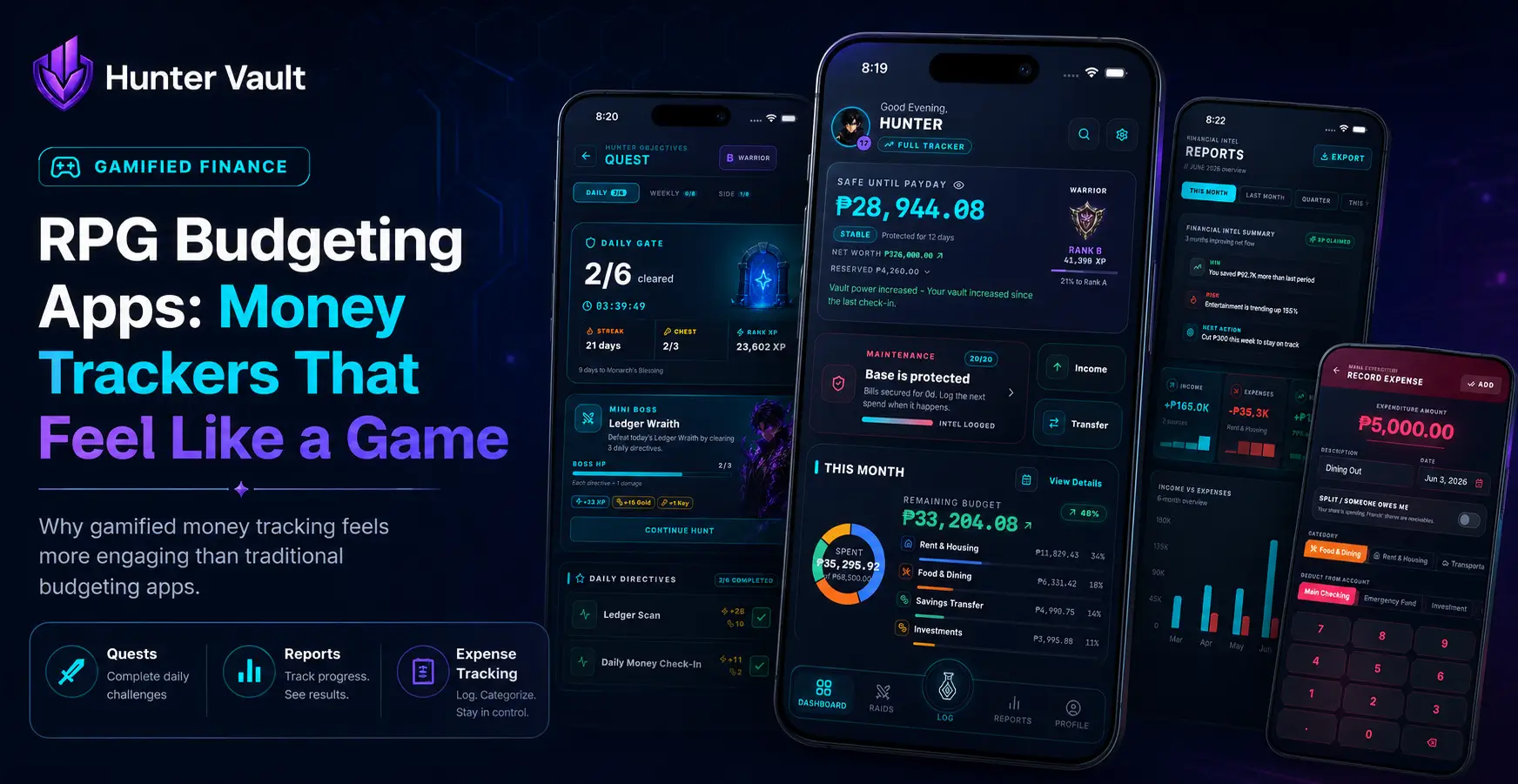
The third style leans fully into RPG mechanics: you have a character or profile that ranks up, money actions earn XP, daily tasks become quests, and consistency builds streaks toward higher ranks. The pull is the same one that keeps you grinding in a real RPG — visible, climbing progress. Hunter Vault is built around this style.
Best for: people who love leveling systems, ranks, and the feeling of a character getting stronger over time.
What to Look For Before You Pick One
The fun layer matters, but a few practical things decide whether an app actually fits your life.
Which game feeling do you want? A city-builder and an RPG rank ladder pull on different instincts. Pick the one that matches what you find satisfying, not the one with the nicest screenshots.
Does it connect to your bank, or stay offline? This is the biggest practical fork. Bank-syncing apps auto-import transactions but require account access and trust in a third party. Manual, offline apps keep everything on your device with no account — less automatic, but private. Neither is “better”; it depends on what you value.
What’s actually free? Most have a free core and a paid upgrade. Check the current app store listing, since pricing and free-tier features change often.
Will you actually open it? The whole point of gamification is consistency, so an app only works if it pulls you back day after day. A flashy one you forget about loses to a plain one you actually use.
Where Hunter Vault Fits
If the style you’re after is RPG progression — ranks, XP, quests, a character that levels up as your money habits improve — that’s exactly what Hunter Vault is built around. It turns expense tracking, budgets, savings goals, and debt payoff into a progression system, and it’s manual and offline, so your financial data stays on your device with no account required.
It won’t be the right pick for everyone. If you specifically want automatic bank syncing, a city-builder aesthetic, or a cute mascot, one of the other styles will fit you better — and that’s fine. Hunter Vault is for the people who want budgeting to feel like leveling up a character, and who’d rather keep their data on their own phone. (Weighing it against the most popular bank-syncing subscription app? See Hunter Vault vs YNAB.) If gaming is specifically why you want better money habits, the RPG framing clicks even harder — how to budget for gaming without quitting and how to stop overspending on gacha games both use the same “make spending visible” approach that powers Hunter Vault’s quest system.
This is general educational content, not financial advice. Choose an app and budgeting approach that fit your income, responsibilities, and situation.
Final Takeaway
Yes, RPG and anime-style budgeting apps exist, and the category is quietly growing because the core idea is sound: budgeting fails on motivation, and games are motivation machines. The styles differ — builders, keepers, and RPG progression systems — so the real choice is which game feeling, and whether you want bank syncing or an offline app.
Start by deciding the one thing that matters most to you: the progression style you’ll actually enjoy. If that’s leveling up a character, try Hunter Vault — it’s free to start, works offline, and is available on iOS and Android.