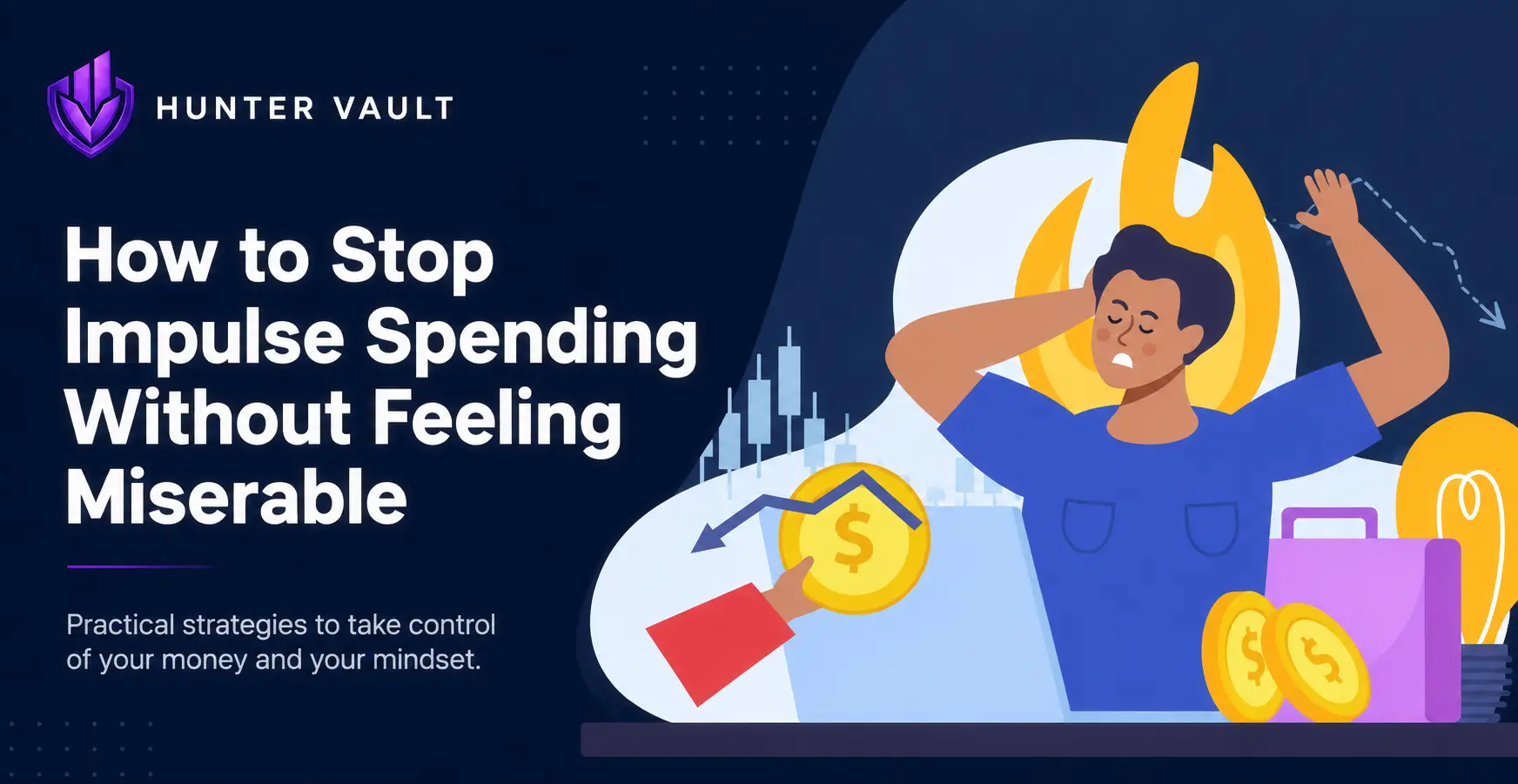
Impulse spending rarely feels like a decision. You see the thing, you want the thing, and somewhere between those two moments your card is already out. The regret shows up later, usually when you check your balance. And it adds up: U.S. shoppers spend an average of around $254 a month on impulse purchases — roughly $3,000 a year — according to Capital One Shopping research.
Most advice for this is just “have more willpower,” which is useless, because willpower is exactly what is missing in the moment you need it. The trick is not to be stronger. It is to make impulse buying slightly harder and to give your real wants a planned place to go.
This guide is about doing that without turning your life into a joyless spreadsheet.
Quick Answer: How Do You Stop Impulse Spending?
To stop impulse spending, add friction so buying is not instant (remove saved cards, use a waiting rule), notice the feelings that trigger your purchases, and give yourself a planned, guilt-free amount for fun so you are not running on pure restraint. The goal is not to remove enjoyment. It is to slow the moment down enough that you can tell a real want from a passing urge.
Why Willpower Isn’t the Problem
We treat impulse spending as a character flaw — a failure of discipline. It usually is not.
Impulse buying is fast and emotional. A trigger hits (boredom, stress, a sale, a bad day), the urge spikes, and modern shopping is engineered to let you act on it in one tap before the urge fades. Saved cards, one-click checkout, “buy now” buttons: all of it exists to shorten the gap between wanting and buying.
Willpower loses this fight because it shows up too late. By the time the rational part of your brain weighs in, you have already bought the thing. So the fix is not more willpower in the moment. It is changing the setup so the moment plays out differently.
Step 1: Add Friction Before You Buy
If one tap is the problem, add steps. Make impulse buying mildly inconvenient and a lot of it simply stops happening.
A few that work:
- Remove saved payment details from shopping apps and browsers. Having to type your card number is often enough of a pause to break the spell.
- Log out of shopping apps, or delete the ones you open out of boredom. Re-downloading is friction too.
- Take items out of the cart and leave them overnight. Most “needs” quietly disappear by morning.
None of this relies on willpower. It relies on time and small obstacles, which work even when your discipline does not.
Step 2: Use a Waiting Rule
Give every non-essential purchase a waiting period. The exact length matters less than the pause itself:
- 24 hours for smaller buys.
- A week for bigger ones.
If you still want it after the wait, and it fits your budget, buy it — guilt-free, because now it is a decision rather than a reflex. Most of the time, though, the urge fades, and you discover you did not actually want the thing. You wanted the feeling of buying something, which is a different need entirely.
Step 3: Know Your Triggers
Impulse purchases usually ride on an emotion. Catch the feeling and you catch the spending.
Common triggers:
- Boredom (scrolling shops with nothing else to do)
- Stress (buying as a small hit of control or comfort)
- Sales and “limited time” pressure (manufactured urgency)
- Social comparison (seeing what others have)
For a week, when you feel the urge to buy, note what you were feeling first. Patterns appear fast. Once you know your trigger, you can meet the actual need — a walk for boredom, a break for stress — instead of spending to paper over it.
Step 4: Give Yourself a Guilt-Free Fun Budget
Here is the part most advice skips, and it is the most important.
Pure restraint backfires. Cut out all spontaneous spending and the pressure builds until you snap and overspend, then feel terrible. The way to avoid the binge is to plan for fun on purpose.
Decide on an amount — whatever fits your situation — that is yours to spend on whatever you like, no justification needed. When the urge to buy hits and it comes out of your fun budget, you can say yes without guilt, because you already decided this money was for enjoyment. Spending you planned for is not impulse spending. It is just living.
A Simple Example
Aisha impulse-buys clothes online when she is bored at night. She sets up three things:
She removes her saved card from the shopping app, so checkout now means digging out her wallet. She adds a 24-hour rule for anything non-essential. And she gives herself a set monthly fun amount she can spend however she wants.
A week in, she notices the pattern: the urge is almost always boredom at 11pm. Now when it hits, the friction slows her down, the waiting rule catches most of it, and the things she does still want come out of her fun budget — bought deliberately, with no guilt. She did not quit shopping. She just stopped doing it by accident.
Common Mistakes to Avoid
- Relying on willpower in the moment. It arrives too late to help.
- Trying to cut all fun spending, which builds pressure until you overspend.
- Keeping saved cards and one-tap checkout, then wondering why buying feels automatic.
- Ignoring the emotion behind the purchase and treating it as a logistics problem.
- Beating yourself up after a slip, which adds shame without changing the setup.
How Hunter Vault Can Help
Impulse spending thrives in the dark — the purchases you never really register. Hunter Vault helps by making them visible: logging spending shows you the pattern and the triggers, and you can set up a dedicated fun-money vault so your guilt-free budget has a clear home and a visible limit, separate from the money that already has a job. Tracking your trigger week as a short streak can make the noticing habit easier to keep.
It does not block purchases or connect to your bank — it is a manual tracker, so awareness comes from you logging and seeing, not from automation. It is not a bank or a financial advisor. It is a way to turn impulse spending from an invisible habit into something you can actually see and plan around.
Final Takeaway
You do not stop impulse spending by being stronger. You stop it by slowing the moment down — friction, a waiting rule, knowing your triggers — and by giving your real wants a planned, guilt-free place to land. Restraint alone breaks; a system you can live with holds.
Start with one small action: remove your saved card from the one app you impulse-buy from most. That tiny bit of friction is doing real work from the very next urge. If your weak spot is online specifically, see how to control online shopping.
Frequently Asked Questions
Why can’t I stop impulse buying with willpower?
Because willpower arrives too late. Impulse buying is fast and emotional, and one-tap checkout lets you act before the rational part of your brain catches up. Adding friction and a waiting rule works better because it changes the moment instead of relying on in-the-moment strength.
What is the waiting rule for impulse spending?
You give every non-essential purchase a waiting period — say 24 hours for small buys, a week for larger ones. If you still want it afterward and it fits your budget, you buy it. Most urges fade during the wait, revealing they were impulses rather than real wants.
Is it bad to spend money on fun?
Not at all. Planned fun spending is healthy and actually helps you avoid impulse binges. The problem is unplanned, reflexive spending — not enjoyment you budgeted for on purpose.
How do I know if a purchase is an impulse?
A quick test is the waiting rule: if the urge fades within a day or two, it was likely an impulse. Genuine wants tend to survive a short pause; passing urges usually do not.
What triggers impulse spending?
Common triggers are boredom, stress, sale pressure, and social comparison. Most impulse purchases ride on an emotion, so noticing what you feel right before you buy is the fastest way to catch the pattern.